AWS Architecture Blog
Category: Advanced (300)

S&P Global’s innovative disaster recovery strategy using Amazon FSx for NetApp ONTAP snapshots
In this post, we explain how S&P Global Market Intelligence implemented an innovative disaster recovery solution for their Capital IQ platform using Amazon FSx for NetApp ONTAP. This solution enables immediate failover to read-only mode in a secondary region within 15 minutes, followed by full read-write recovery when needed. This approach achieves reduction in failover time while maintaining data consistency for global financial operations.
Building highly available Oracle databases with Amazon FSx for NetApp ONTAP
This post shows how to build a highly available Oracle database architecture using FSxN shared storage, Auto Scaling groups with dynamic AMI updates, and serverless orchestration to help reduce recovery times with current configurations.
Automating contract intelligence with Doczy.ai™ on AWS
In this post, we show you how Doczy.ai™ uses generative AI on AWS to automate contract intelligence at scale, transforming unstructured documents into structured, actionable insights, so organizations can automate critical business processes and unlock the full value of their data.
Building a scalable user search layer on top of Amazon Cognito
In this post, we show how to build a comprehensive scalable user search layer on top of Amazon Cognito using AWS Lambda, Amazon DynamoDB, and Amazon OpenSearch Service.
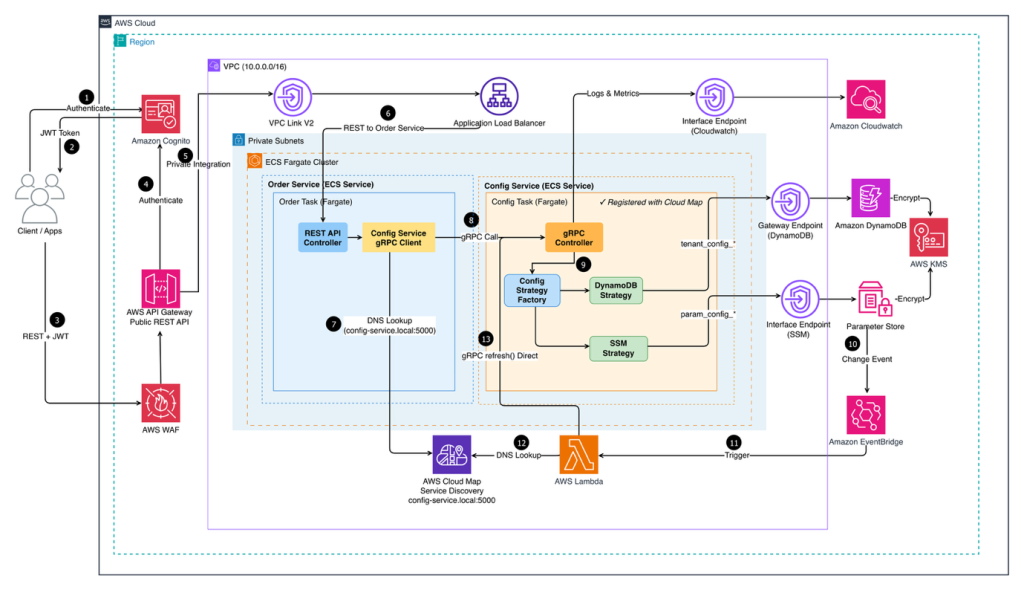
Build a multi-tenant configuration system with tagged storage patterns
In this post, we demonstrate how you can build a scalable, multi-tenant configuration service using the tagged storage pattern, an architectural approach that uses key prefixes (like tenant_config_ or param_config_) to automatically route configuration requests to the most appropriate AWS storage service. This pattern maintains strict tenant isolation and supports real-time, zero-downtime configuration updates through event-driven architecture, alleviating the cache staleness problem.

Automate safety monitoring with computer vision and generative AI
This post describes a solution that uses fixed camera networks to monitor operational environments in near real-time, detecting potential safety hazards while capturing object floor projections and their relationships to floor markings. While we illustrate the approach through distribution center deployment examples, the underlying architecture applies broadly across industries. We explore the architectural decisions, strategies for scaling to hundreds of sites, reducing site onboarding time, synthetic data generation using generative AI tools like GLIGEN, and other critical technical hurdles we overcame.
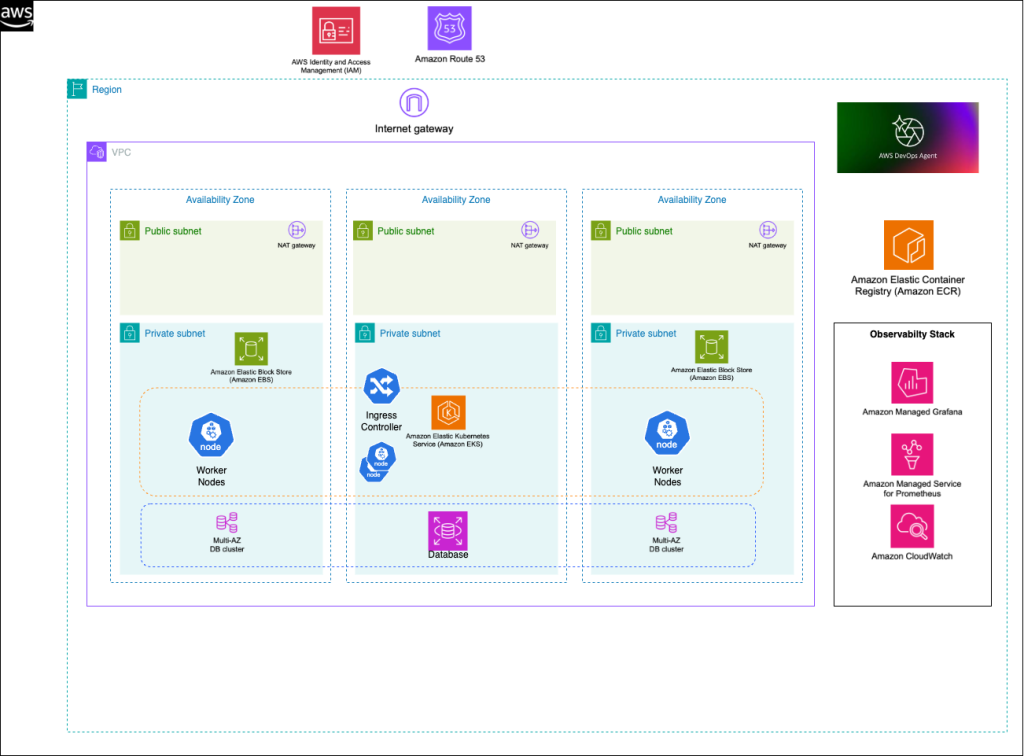
AI-powered event response for Amazon EKS
In this post, you’ll learn how AWS DevOps Agent integrates with your existing observability stack to provide intelligent, automated responses to system events.

How Convera built fine-grained API authorization with Amazon Verified Permissions
In this post, we share how Convera used Amazon Verified Permissions to build a fine-grained authorization model for their API platform.
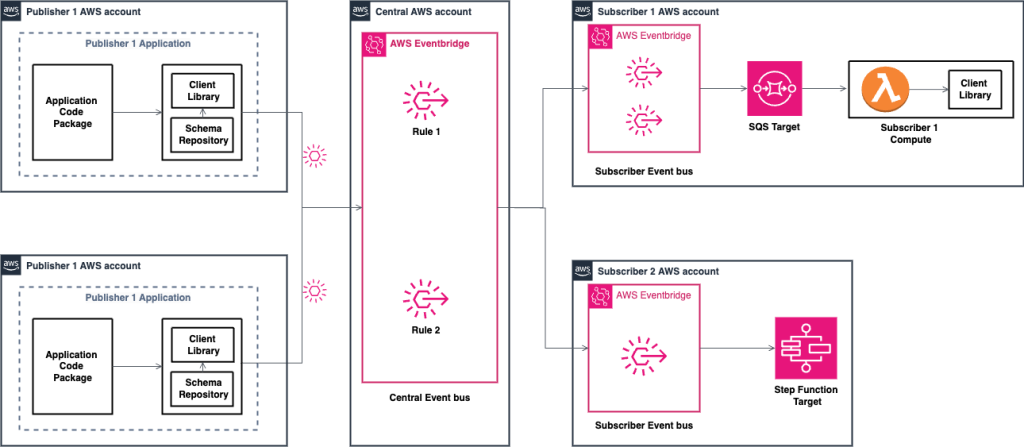
Mastering millisecond latency and millions of events: The event-driven architecture behind the Amazon Key Suite
In this post, we explore how the Amazon Key team used Amazon EventBridge to modernize their architecture, transforming a tightly coupled monolithic system into a resilient, event-driven solution. We explore the technical challenges we faced, our implementation approach, and the architectural patterns that helped us achieve improved reliability and scalability. The post covers our solutions for managing event schemas at scale, handling multiple service integrations efficiently, and building an extensible architecture that accommodates future growth.
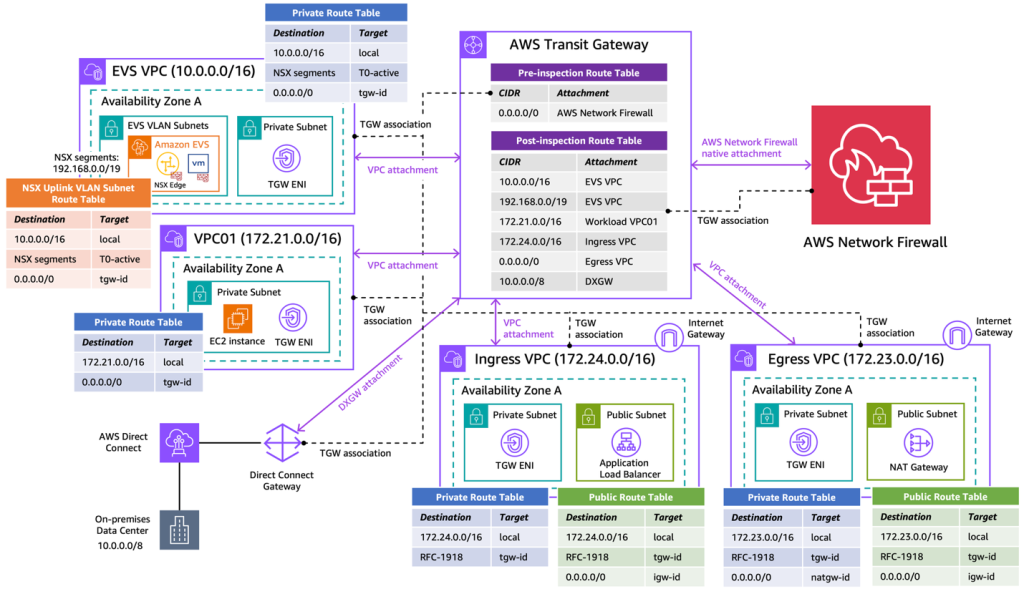
Secure Amazon Elastic VMware Service (Amazon EVS) with AWS Network Firewall
In this post, we demonstrate how to utilize AWS Network Firewall to secure an Amazon EVS environment, using a centralized inspection architecture across an EVS cluster, VPCs, on-premises data centers and the internet. We walk through the implementation steps to deploy this architecture using AWS Network Firewall and AWS Transit Gateway.