AWS Architecture Blog
Category: Advanced (300)
Build resilient generative AI agents
Generative AI agents in production environments demand resilience strategies that go beyond traditional software patterns. AI agents make autonomous decisions, consume substantial computational resources, and interact with external systems in unpredictable ways. These characteristics create failure modes that conventional resilience approaches might not address. This post presents a framework for AI agent resilience risk analysis […]
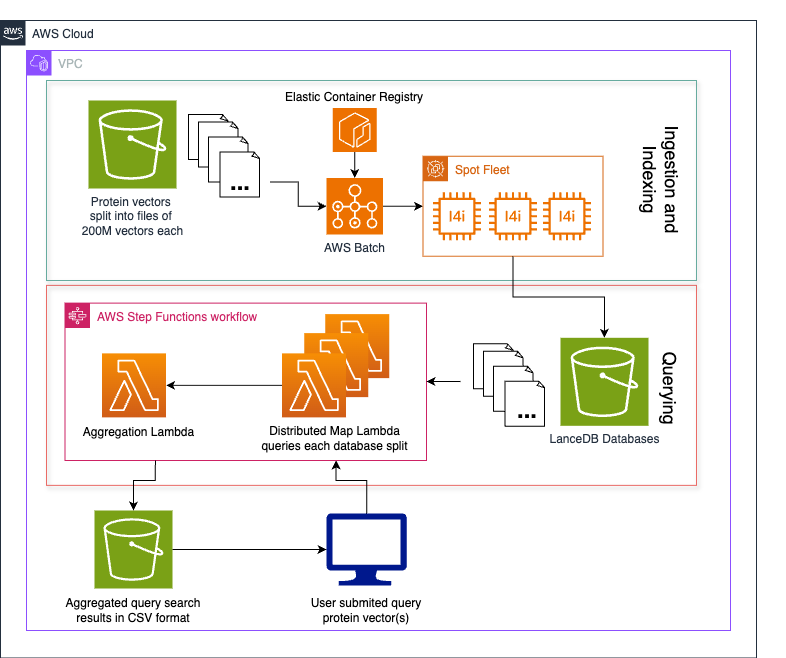
A scalable, elastic database and search solution for 1B+ vectors built on LanceDB and Amazon S3
In this post, we explore how Metagenomi built a scalable database and search solution for over 1 billion protein vectors using LanceDB and Amazon S3. The solution enables rapid enzyme discovery by transforming proteins into vector embeddings and implementing a serverless architecture that combines AWS Lambda, AWS Step Functions, and Amazon S3 for efficient nearest neighbor searches.
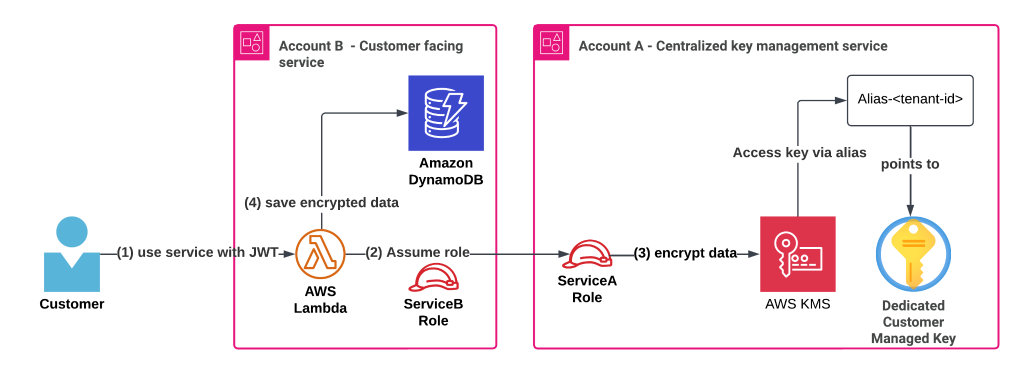
Simplify multi-tenant encryption with a cost-conscious AWS KMS key strategy
In this post, we explore an efficient approach to managing encryption keys in a multi-tenant SaaS environment through centralization, addressing challenges like key proliferation, rising costs, and operational complexity across multiple AWS accounts and services. We demonstrate how implementing a centralized key management strategy using a single AWS KMS key per tenant can maintain security and compliance while reducing operational overhead as organizations scale.

How Karrot built a feature platform on AWS, Part 1: Motivation and feature serving
This two-part series shows how Karrot developed a new feature platform, which consists of three main components: feature serving, a stream ingestion pipeline, and a batch ingestion pipeline. This post starts by presenting our motivation, our requirements, and the solution architecture, focusing on feature serving.
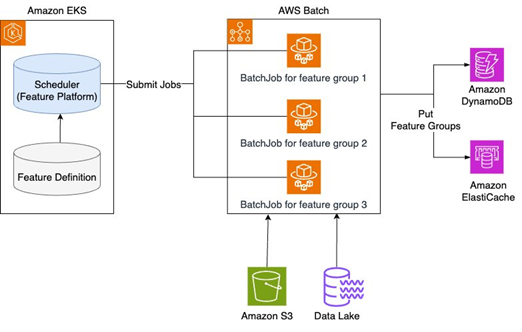
How Karrot built a feature platform on AWS, Part 2: Feature ingestion
This two-part series shows how Karrot developed a new feature platform, which consists of three main components: feature serving, a stream ingestion pipeline, and a batch ingestion pipeline. This post covers the process of collecting features in real-time and batch ingestion into an online store, and the technical approaches for stable operation.
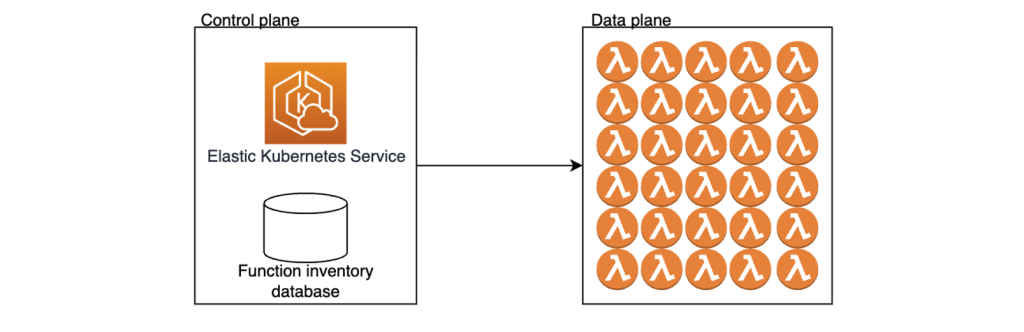
How Zapier runs isolated tasks on AWS Lambda and upgrades functions at scale
In this post, you’ll learn how Zapier has built their serverless architecture focusing on three key aspects: using Lambda functions to build isolated Zaps, operating over a hundred thousand Lambda functions through Zapier’s control plane infrastructure, and enhancing security posture while reducing maintenance efforts by introducing automated function upgrades and cleanup workflows into their platform architecture.
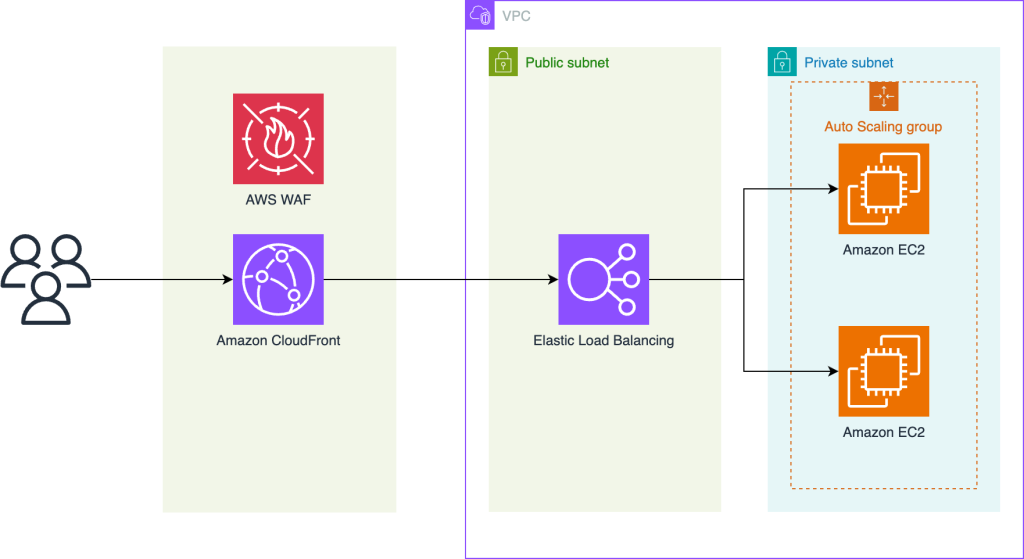
How Scale to Win uses AWS WAF to block DDoS events
In this post, you’ll learn how Scale to Win configured their network topology and AWS WAF to protect against DDoS events that reached peaks of over 2 million requests per second during the 2024 US presidential election campaign season. The post details how they implemented comprehensive DDoS protection by segmenting human and machine traffic, using tiered rate limits with CAPTCHA, and preventing CAPTCHA token reuse through AWS WAF Bot Control.

Build a multi-Region AWS PrivateLink backed service with seamless failover
This post demonstrates how the Issuer Solutions business of Global Payments, as a service provider, implemented cross-Region failover for an AWS PrivateLink backed service exposed to their customers. Their solution enables failover to a secondary Region without customer coordination, reducing Recovery Time Objective (RTO).
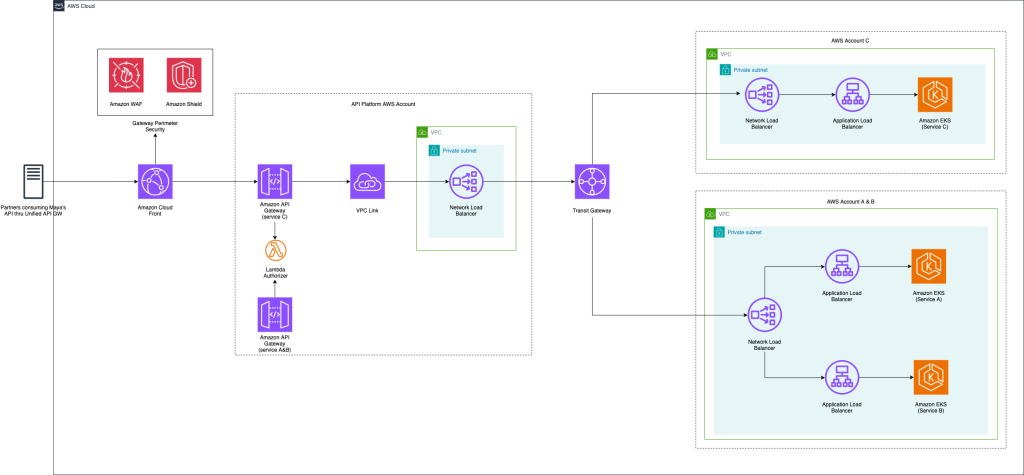
Transforming Maya’s API management with Amazon API Gateway
In this post, you will learn how Amazon Web Services (AWS) customer, Maya, the Philippines’ leading fintech company and digital bank, built an API management platform to address the growing complexities of managing multiple APIs hosted on Amazon API Gateway.

Pilot light with reserved capacity: How to optimize DR cost using On-Demand Capacity Reservations
In this post, we explore an intermediate strategy between the pilot light and the warm standby strategies: pilot light with reserved capacity. You can use this strategy to reserve compute capacity in a secondary Region while also limiting cost.