AWS Quantum Technologies Blog
Category: Thought Leadership

Thermodynamic sampling of disordered materials with an analog Hamiltonian Rydberg simulator
This post was contributed by Mao Lin, Bruno Camino, John Buckeridge and Scott M. Woodley Many advanced materials — from battery electrodes to semiconductor alloys — owe their useful properties to atomic-scale disorder. But predicting how atoms arrange themselves at a given temperature is hard: the number of possible configurations explodes combinatorially and sampling them […]

A framework for quantum-classical integration decisions
This post was contributed by Dimitar Trenev, Sebastian Stern, Tyler Takeshita, Cedric Lin, Peter Komar, Pooja Rao, Jerome Gonthier, and Elica Kyoseva. As quantum computing matures toward fault tolerance, a pressing question faces the high-performance computing (HPC) community: why is tightly integrating quantum processors to classical supercomputing infrastructure important? Today, algorithm researchers from Amazon Web […]

AWS Deepens Strategic Collaboration with QuEra to Bring Fault-Tolerant Quantum Computing to Amazon Braket
AWS and QuEra will bring the first fault-tolerant quantum computers to the cloud, enabling scientifically relevant applications starting in 2028. Since launching Amazon Braket in 2020, AWS has provided customers access to quantum computing hardware across multiple modalities, helping them explore quantum algorithms and prepare for the future of accelerated computing. Today, we are announcing […]

AWS announces the Quantum Embark Program to help customers get ready for quantum computing
Quantum computing promises to revolutionize industries. Our new Quantum Embark program provides expert guidance to help you harness its potential.

New open source tool expands access to lab-based quantum prototypes: Cloud Queue for Quantum Devices
Experimental physicists are vital to the future of quantum computing, sensing, and networking, laying the groundwork for new types of devices and enhancing the performance of existing technology. Their work, like all open science, can be accelerated through collaboration, but providing access to prototype hardware is challenging. The Cloud Queue for Quantum Devices project provides […]

Quantum error correction in the presence of biased noise
Have you ever heard about error correction? Without it, we could not obtain awe-inspiring pictures of Jupiter and its moons, conduct intelligible mobile phone calls, or have reliable computers. In this blog post, we explain the basic ideas behind error correction and how to apply it to quantum computing. In addition, we discuss how we […]
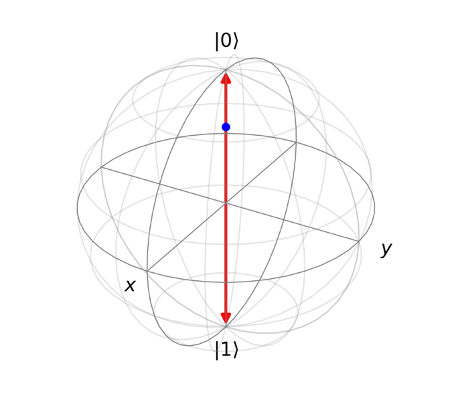
Bernoulli line and the Bloch sphere: visualizing probability and quantum states
Introduction In recent years, quantum computers have evolved from laboratory experiments available to only a handful of scientists, to research devices that are accessible worldwide through cloud services like Amazon Braket. The impact of cloud access to quantum computers is not limited to laboratory scientists and developers as it allows educators to bring these devices […]
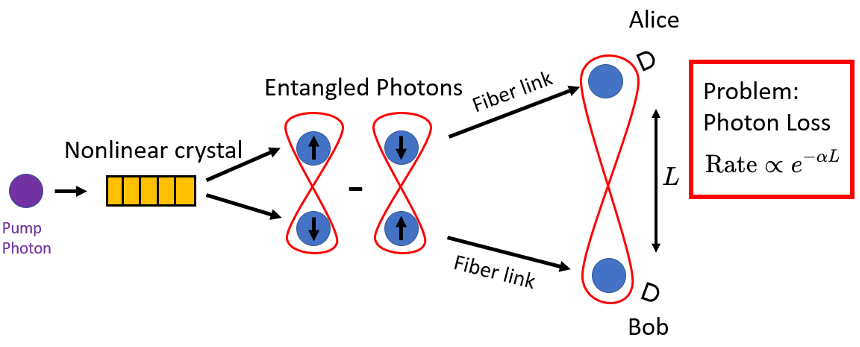
An Illustrated Introduction to Quantum Networks and Quantum Repeaters
Quantum networks are an emerging technology that distribute entangled quantum bits to geographically separated users. These networks can enable new communication tasks such as the generation of shared cryptographic keys whose security does not depend on algorithmic complexity. This security can supplement and extend the current state-of-the-art in public key cryptography and future-proof it against […]
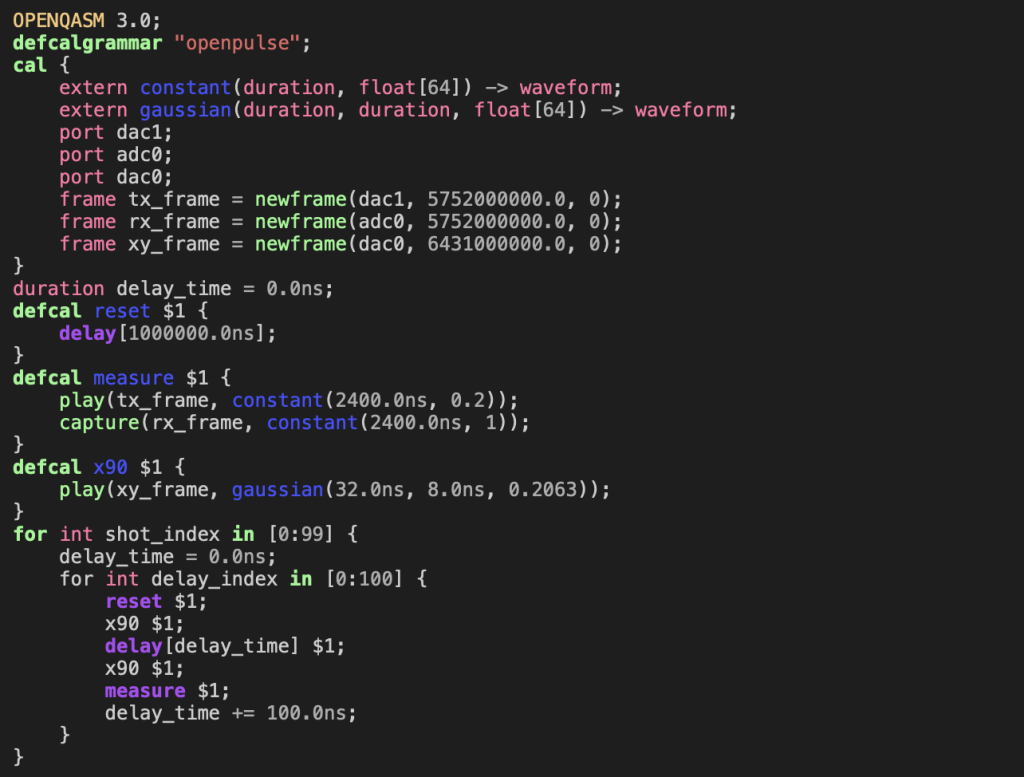
AWS open-sources OQpy to make it easier to write quantum programs in OpenQASM 3
In September 2021, we announced that AWS would be joining the OpenQASM 3 Technical Steering Committee in an effort to establish a consistent, industry-wide approach for describing quantum programs. In that blog post we also shared our plans to help extend the OpenQASM ecosystem to work with hardware being developed at the AWS Center for Quantum Computing. […]

Combinatorial Optimization with Physics-Inspired Graph Neural Networks
Combinatorial optimization problems, such as the traveling salesman problem where we are looking for an optimal path with a discrete number of variables, are pervasive across science and industry. Practical (and yet notoriously challenging) applications can be found in virtually every industry, such as transportation and logistics, telecommunications, and finance. For example, optimization algorithms help […]