AWS Quantum Technologies Blog
Category: Technical How-to

Thermodynamic sampling of disordered materials with an analog Hamiltonian Rydberg simulator
This post was contributed by Mao Lin, Bruno Camino, John Buckeridge and Scott M. Woodley Many advanced materials — from battery electrodes to semiconductor alloys — owe their useful properties to atomic-scale disorder. But predicting how atoms arrange themselves at a given temperature is hard: the number of possible configurations explodes combinatorially and sampling them […]

A framework for quantum-classical integration decisions
This post was contributed by Dimitar Trenev, Sebastian Stern, Tyler Takeshita, Cedric Lin, Peter Komar, Pooja Rao, Jerome Gonthier, and Elica Kyoseva. As quantum computing matures toward fault tolerance, a pressing question faces the high-performance computing (HPC) community: why is tightly integrating quantum processors to classical supercomputing infrastructure important? Today, algorithm researchers from Amazon Web […]
Analog Hamiltonian simulation with PennyLane
In this post, we’ll describe how the PennyLane-Braket SDK plugin to study the ground state of the anti-ferromagnetic Ising spin-chain on a 1D lattice on the Aquila quantum processor, a neutral-atom quantum computer available on-demand via the AWS Cloud.
Designing hybrid algorithms for neutral-atom quantum hardware using Bayesian optimization
BMW sponsors PhD students to research novel approaches to computational challenges. Today we’ll show you how they bridge the gap between academia and industry, to solve some of the hardest problems in industry using Bayesian protocols for quantum optimization problems.
Optimization with OpenQAOA on Amazon Braket
In this blog post, we introduce OpenQAOA, Entropica Labs’ open-source SDK for the QAOA, and OpenQAOA-Braket, a plugin specifically designed to expand OpenQAOA’s capabilities by leveraging Amazon Braket.

Quantum error correction in the presence of biased noise
Have you ever heard about error correction? Without it, we could not obtain awe-inspiring pictures of Jupiter and its moons, conduct intelligible mobile phone calls, or have reliable computers. In this blog post, we explain the basic ideas behind error correction and how to apply it to quantum computing. In addition, we discuss how we […]
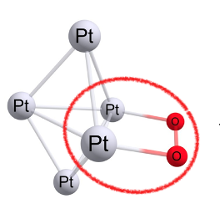
Exploring computational chemistry using Quantinuum’s InQuanto on AWS
Introduction Quantum computers hold the promise of driving novel approaches to solving complex problems across multiple fields, including optimization, machine learning, and the simulation of physical systems. Researchers are already using quantum computers to explore computational chemistry problems, however the scale and capabilities of quantum devices available today is limited by noise and other factors. […]

Noise in Quantum Computing
Customers looking to solve their hardest computational problems often wonder about the production-readiness of quantum computing. They want to know when a full-scale, fault-tolerant quantum computer will be available, and what the obstacles are to achieving this ambitious goal. Current generation quantum computers are not fault-tolerant and have limited utility, but customers are experimenting with […]

Introducing the Qiskit provider for Amazon Braket
We are excited to share a solution to one of our most frequent customer requests: a Qiskit provider for Amazon Braket. Users can now take their existing algorithms written in Qiskit, a widely used open-source quantum programming SDK and, with a few lines of code, run them directly on Amazon Braket. The qiskit-braket-provider currently supports […]

Using embedded simulators in Amazon Braket Hybrid Jobs
Today, we launched a new feature in Amazon Braket Hybrid Jobs, which allows you to run hybrid workloads with simulators that are embedded with your algorithm code. For instance, one of the simulators available in this new feature is the PennyLane Lightning GPU simulator, accelerated by NVIDIA’s cuQuantum library. In this blog post, we show […]