
Sold by: Allstacks
Deployed on AWS
The Allstacks platform is a purpose-built, comprehensive, value stream intelligence solution to better align engineering work to business outcomes.
4.5
Overview
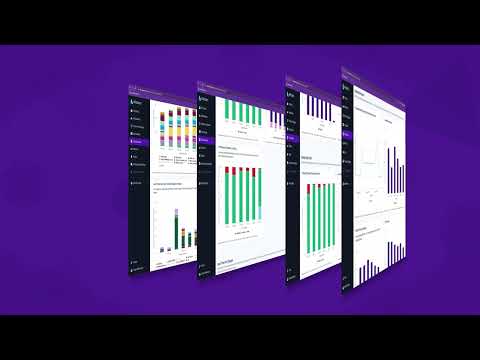
Allstacks ingests engineering data from common git-based SCM tools like GitLab and GitHub, popular build tools like Jenkins and CircleCI, as well as portfolio management tools like Jira, to turn engineering data throughout the SDLC into meaningful metrics and visualizations that elicit action. Engineering organizations and leaders use these insights to gain complete visibility into the state of deliverables, forecast work completion dates to release more predictably, and measure and improve overall team performance. This unlocks the ability for leaders to drive healthy change across the organization and accelerate the delivery of value to customers.
Highlights
- Measure and visualize the flow of value
- Intelligently forecast when work will be complete and align engineering output to business initiatives
- Improve release predictability, process health, and drive a culture of continuous improvement
Details
Sold by
Delivery method
Deployed on AWS
New
Introducing multi-product solutions
You can now purchase comprehensive solutions tailored to use cases and industries.

Features and programs
Trust Center

Access real-time vendor security and compliance information through their Trust Center powered by Drata or Vanta. Review certifications and security standards before purchase.
Buyer guide
Gain valuable insights from real users who purchased this product, powered by PeerSpot.

Financing for AWS Marketplace purchases
AWS Marketplace now accepts line of credit payments through the PNC Vendor Finance program. This program is available to select AWS customers in the US, excluding NV, NC, ND, TN, & VT.

Pricing
Pricing is based on the duration and terms of your contract with the vendor. This entitles you to a specified quantity of use for the contract duration. If you choose not to renew or replace your contract before it ends, access to these entitlements will expire.
Additional AWS infrastructure costs may apply. Use the AWS Pricing Calculator to estimate your infrastructure costs.
Dimension | Description | Cost/12 months |
|---|---|---|
Allstacks Enterprise | All Product Features, Unlimited users, Dedicated support (Slack/Teams), Implementation workshop, Expert-led day zero QBR, On-site business reviews, Curated playbooks, Board deck creation, ROI assessment & consultation, Single-tenant hosting | $200,000.00 |
Allstacks Premium | All Product Features, Up to 500 users, Commercial support, Assisted onboarding, Self-serve knowledge base, Dedicated trainings, Monthly office hours, Multi-tenant hosting | $100,000.00 |
Vendor refund policy

Legal
Vendor terms and conditions
Upon subscribing to this product, you must acknowledge and agree to the terms and conditions outlined in the vendor's End User License Agreement (EULA) .
Content disclaimer
Vendors are responsible for their product descriptions and other product content. AWS does not warrant that vendors' product descriptions or other product content are accurate, complete, reliable, current, or error-free.
Delivery details
Software as a Service (SaaS)
SaaS delivers cloud-based software applications directly to customers over the internet. You can access these applications through a subscription model. You will pay recurring monthly usage fees through your AWS bill, while AWS handles deployment and infrastructure management, ensuring scalability, reliability, and seamless integration with other AWS services.
Resources
Vendor resources
Support
Vendor support
- Dedicated CSM
- Direct support connection via Slack, Teams, etc
- Extensive knowledge base
- Maturity model to map progress against
AWS infrastructure support
AWS Support is a one-on-one, fast-response support channel that is staffed 24x7x365 with experienced and technical support engineers. The service helps customers of all sizes and technical abilities to successfully utilize the products and features provided by Amazon Web Services.
Updated weekly
By Allstacks

By Hivel

Top
50
In Agile Lifecycle Management
Top
50
In Project Management
Top
10
In Agile Lifecycle Management
Sentiment is AI generated from actual customer reviews on AWS and G2
Functionality
Ease of use
Customer service
Cost effectiveness
Positive reviews
Mixed reviews
Negative reviews
AI generated from product descriptions
Multi-Source Data Integration
Ingests engineering data from git-based SCM tools including GitLab and GitHub, build tools such as Jenkins and CircleCI, and portfolio management tools like Jira
Value Stream Metrics and Visualization
Transforms engineering data throughout the SDLC into meaningful metrics and visualizations to measure and visualize the flow of value
Work Completion Forecasting
Provides intelligent forecasting capabilities to predict work completion dates and enable more predictable release planning
Delivery Visibility and Monitoring
Delivers complete visibility into the state of deliverables and overall team performance across the engineering organization
Process Health Analytics
Measures and analyzes process health indicators to identify opportunities for continuous improvement and organizational change
AI Impact Measurement
Tracks AI-generated code reaching production and measures impact on speed, quality, and rework with financial ROI linkage to guide engineering investment decisions.
Standardized Performance Scoring
Provides Hivel Score built on SPACE metrics for developers to enable consistent performance comparison across teams, regions, seniority levels, and product lines.
Automated Code Review
Includes AI Code Review Agent with full repository context that automates first-pass code reviews, reducing cognitive load for human reviewers by 60 to 70 percent.
Multi-System Integration
Connects with code repositories, ticketing tools, CI/CD systems, and calendars to consolidate engineering signals into unified view of work movement across coding, review, merge, and release stages.
Developer Workload and Focus Monitoring
Monitors deep work time spent on focused coding versus meetings and distractions, identifies overloaded developers, and tracks work allocation across tech debt, customer success tickets, and roadmap items.
AI Impact Measurement
Tracks adoption and utilization of AI tools, measures AI-assisted pull requests, and connects productivity changes to engineering outcomes including cycle time, deployment frequency, defect rates, and delivery predictability.
Multi-Source Data Integration
Passively ingests signals from source control, issue trackers, CI/CD pipelines, cloud infrastructure, and AI coding assistants to create a unified intelligence layer.
Engineering Performance Metrics
Implements DORA and SPACE framework-based metrics to benchmark engineering performance, measure delivery health, and track developer experience across teams and product areas.
AWS-Native Architecture
Built on AWS infrastructure utilizing Amazon Bedrock for chat and agentic experiences and Amazon SageMaker for intelligent work classification to provide secure and scalable analytics.
Investment Allocation Analytics
Provides unified visibility into R&D investment allocation, tool spend rationalization, and ROI analysis across engineering teams and AI tool investments.
Standard contract
No
No
Customer reviews
Ahmed Zakarriyah
Data-driven forecasting has transformed sprint visibility and consistently improves delivery speed
Reviewed on Jun 05, 2026
Review from a verified AWS customer
What is our primary use case?
My main use case for Allstacks is on the predictive milestone forecasting and early risk detection. Regarding how I use Allstacks day-to-day, it basically bridges the communication gap between technical teams and leadership. Instead of sharing dense developer metrics, it translates Git commands and sprint activity into high-level business velocity updates, ensuring partners and leadership have clear visibility into the health of projects.
How has it helped my organization?
Allstacks has positively impacted my organization, with the most immediate quantifiable metrics shown in the pipeline efficiency and cycle times. Because the platform continuously tracks bottlenecks without requiring a developer, it allows the organization to see substantial gains in development velocity. It reduces the cycle time, so my engineering team frequently achieves a thirty to thirty-five percent reduction in overall cycle times. The time it takes for an idea to go from a ticket to production code is reduced drastically. Before Allstacks, we usually suffered from the red reality trap where sprint health looks perfect until right before the release deadline. It eliminates any late surprises.
When I say the engineering team achieved a percent reduction in cycle times, before deploying Allstacks, a standard high-priority feature from the product backlog usually takes around seventeen or eighteen days to move from an approved ticket to production code. The team was constantly running into invisible walls, but nobody could pinpoint exactly where the work was stalling. When we look at the data now, the actual time saving happens across two phases of the workflow. It collapsed the code review bottleneck. Allstacks made the queue latency instantly visible on our morning dashboard. By restructuring how we assigned our codes based on real-time capacity, we dropped the review time from eighty-four hours to under twenty-four hours. By utilizing the Product Studio upstream, AI agents began stress-testing our feature specifications for technical feasibility before any line of code was written. This upfront validation eliminates ambiguous requirements, dropping our code bounce-back rates by nearly forty percent. When you add up those individual optimizations, that same high-priority feature that would take over two weeks hits production within eight to ten days.
What is most valuable?
The best feature of Allstacks is its ability to build a Context Graph architecture. Instead of displaying standard isolated data charts from individual tools, it natively links everything together. It connects a product specification written at the very beginning of a cycle directly to Git commits, code reviews, deployment logs, and JIRA ticket tracking. It usually forces my engineering team to change how they work.
Having everything linked together in the context graph helps my team day-to-day by fundamentally rewriting how we operate on a daily basis. The impact of a connected context graph comes down to a simple major shift. It replaces educated guessing with objective shared reality. When the data layer treats product specs, code comments, and project tickets as a single conversation, it flows globally rather than as separate files. Ultimately, it takes the emotion out of project management. The team stops fighting the tools or guessing the status and starts focusing entirely on working together to clear blockers and deliver high-quality code.
What needs improvement?
Allstacks can be improved by transitioning from a daily data synchronization cycle. For executive-level stakeholders, a twenty-four-hour sync is perfectly fine. However, for the engineering team running active sprints, a twenty-four-hour sync is too much. The platform needs to transition to near real-time or customizable webhook-driven refreshes, so teams are not making mid-sprint adjustments based on yesterday's numbers. Allstacks tells you exactly where your pipeline is broken, but it does not do anything to fix it. Competitors such as Linear B now use workflow automation tools such as GitStream to automatically reroute idle PRs to assign reviewers or enforce team policies right inside GitHub . Moving from passive alerting to active automated workflow orchestration within the repository would turn insights into immediate actions. These are improvements that should be made.
For how long have I used the solution?
I have been using Allstacks for about one or two years.
What do I think about the stability of the solution?
Allstacks achieves an exceptionally high accuracy in predictive milestone forecasting because it usually ignores superficial status checkboxes and looks at actual, unvarnished history. Standard project management tracking software usually suffers from human bias, but Allstacks does not. It is highly reliable for tracking trend lines, cycle velocity, and lead times. However, leadership must still remember that it tracks system patterns, not human nuances. The metrics are highly stable, but they still require a layer of human interpretation to fill in real-world gaps.
What other advice do I have?
The major advice I would give to anyone looking into using Allstacks is to treat it as an operational change management tool rather than another dashboard. Fix the requirement pipeline first and do not weaponize the metrics. Establish strict naming and ticket hygiene. Then build role-specific onboarding plans because Allstacks aggregates an immense volume of data from your entire SDLC. Simply handing open access to the entire organization on day one leads to immediate dashboard fatigue. I give this product an overall rating of eight out of ten.
Which deployment model are you using for this solution?
Hybrid Cloud
If public cloud, private cloud, or hybrid cloud, which cloud provider do you use?
Oscar Dalence
Agile teams have improved KPI tracking, plan confidently, and measure code efficiency
Reviewed on Jun 01, 2026
Review provided by PeerSpot
What is our primary use case?
My main use case for Allstacks is to track KPIs, to track performance reviews for the team, and also get metrics for the Scrum teams, while also tracking goals for the company in Allstacks .
In our recent project, we are using Allstacks to track our 2025 goals. For example, we track the hours worked by value area, hours worked for planned versus unplanned work. We also have tracking of tickets closed in the last 90 days, along with bounce backs tracking such as issues completed with bounce back by team, issues completed by team, story pointing, and closed tickets by story point value. We monitor the backlog health and metrics related to open items created in the past. These are the main KPIs that we are tracking.
We track how the team performs on every single iteration, where we monitor the commitments for the sprints, how many items we have completed, removed, or added during the sprint. Additionally, we track code efficiency to see metrics related to whether the team is actively contributing code, the team's coding days per week, the merged pull requests, how many pull requests we have per week, and the type of code that the team is committing such as new work, legacy, library, or churn code. We also observe whether we are helping other teams or commenting in tickets, and we consider the time spent on PR, how much time a PR is in team status or is closed, along with the number of pull requests that the team is merging per week. These are the metrics that we use with my team.
What is most valuable?
In my opinion, the best features Allstacks offers are the iteration metrics, the deliveries or deliverables which outline what we are going to deliver in the next six months or a year, and the ability to track our KPIs, including code efficiency. These are the most valuable metrics that I have observed.
Allstacks positively impacts our organization because we can track and plan accordingly for the next two quarters or half of the year, while also seeing the gaps that we have in the Agile methodology that we are using as an organization. Furthermore, we can measure better the team's behaviors.
What needs improvement?
The only improvement that I see in Allstacks is that they need to have a live update feature because right now, we need to wait until the next day to see our metrics updated. It would be great if we could see updates immediately as we make any changes or move things in the backlog.
Regarding Allstacks's AI capabilities, I think it would be ideal if we can select multiple items to conduct the review of the definition of done or definition of ready, as doing one by one takes a lot of time. It would be really great if they can provide the ability to select multiple items at a time and generate only a single report instead of multiple reports. Overall, it's a really good introduction of Allstacks AI.
Concerning Allstacks's AI capabilities in terms of accuracy and reliability of output, it is almost accurate, and it would be good if we can set the rules on what our definitions of ready or done are. It would be beneficial if we could input the rules and the AI engine can analyze user stories, chores, or features based on our criteria instead of the tool's criteria.
For how long have I used the solution?
I have been using Allstacks for almost a year and two months.
How are customer service and support?
The customer support is excellent, as we receive immediate answers to the questions or concerns that we have. If we raise something, they are very open and their availability is always consistent.
What other advice do I have?
The best outcome that I have observed is that the team is story pointing more accurately, the time management that the team is doing is well handled, and also the pull requests that the developers are doing are taking shorter than before. Another improvement is that we have a clear view of where we are going and what we are going to do in the future, which is very important for the teams and for the people to know our directions.
My advice for others looking into using Allstacks is that they need to have a very clear purpose of what they need and what the tool is going to be used for, along with understanding which decisions are going to be taken from the metrics that Allstacks is going to provide.
Allstacks is an excellent tool and I recommend it completely. I rate the overall solution as a 10 out of 10.
TusharGoel
Predictive insights have improved delivery forecasting and make engineering performance transparent
Reviewed on May 29, 2026
Review from a verified AWS customer
What is our primary use case?
My main use case for Allstacks is to track engineering performance and productivity. I use it to visualize team performance metrics and project progress.
Recently, I used Allstacks to track the sprint, which visualizes pull request cycle times and lets me see bottlenecks to deliver on time.
Beyond productivity, I rely on Allstacks for forecasting delivery timelines, which keeps both my team and stakeholders aligned.
What is most valuable?
The best features Allstacks offers are predictive analytics and visibility to engineer workflows. They stand out by helping me proactively manage delivery risks.
The analytics and workflow visibility features in Allstacks let me catch bottlenecks early and keep everyone on track, so day-to-day planning and prioritizations are going to be smoother.
I appreciate how customizable the dashboards are in Allstacks; it makes it easy to tailor insights for different teams and stakeholders.
Allstacks has positively impacted my organization by reducing delivery delays and improving visibility, leading to more predictable outcomes. For example, my average project completion estimates are now far more accurate with fewer last-minute surprises with delivery timelines.
What needs improvement?
I think Allstacks could improve by offering even more integration with third-party tools and perhaps adding deeper custom report capabilities.
Another improvement would be more individual contributor metrics, which would help balance team-level and personal insights.
For how long have I used the solution?
I have been using Allstacks for around a year or more than two years.
What do I think about the stability of the solution?
Allstacks has been stable overall. I have not experienced any significant downtime or major issues.
What do I think about the scalability of the solution?
Allstacks has scaled very well. As my team grew and my projects expanded, it handled the added complexity smoothly without performance issues.
How are customer service and support?
I reached out to customer support once or twice. The support team was responsive and helpful, so the experience was quite positive.
Which solution did I use previously and why did I switch?
I previously used a combination of Jira dashboards and manual reporting. I switched to Allstacks for its automated insight and more holistic visibility.
How was the initial setup?
The licensing for Allstacks is quite straightforward, and the price is really fair. Setup was quite responsive and took a little bit of time to create.
What was our ROI?
I have seen a solid return on investment with Allstacks because my team has reduced time spent on delivery forecasting by about twenty percent, helping us focus more on actual development.
Which other solutions did I evaluate?
I actually considered tools such as Pluralsight Flow and GetPrime, now powered by Pluralsight as well, but I chose Allstacks for its broader environment and its features and capabilities.
What other advice do I have?
I advise others looking into using Allstacks to clearly define the metrics they care about upfront since Allstacks really shines when you align it with your team's goals and workflows.
I have found Allstacks' AI-driven insights to be quite accurate and reliable. My team trusts the predictions to guide our planning.
I use Allstacks alongside AWS , where most of my infrastructure is already hosted.
I would rate this product eight out of ten.
Which deployment model are you using for this solution?
Public Cloud
If public cloud, private cloud, or hybrid cloud, which cloud provider do you use?
Amazon Web Services (AWS)
James A.
Allstacks is highly recommendable
Reviewed on Sep 15, 2025
Review provided by G2
What do you like best about the product?
easy to use and intuitive User exepreicne
What do you dislike about the product?
honeslty nonegative feedback here from me
What problems is the product solving and how is that benefiting you?
Seamless integration
sai v.
Team Productivity with Allstacks
Reviewed on Sep 11, 2025
Review provided by G2
What do you like best about the product?
I really like how Allstacks brings everything together in one place. Instead of bouncing between Jira, GitHub, and other tools, I get a clear picture of how projects are moving. The dashboards are super easy to understand, and the predictive insights help me spot risks before they turn into bigger problems. It saves me a lot of time and gives me confidence when I need to update stakeholders.
What do you dislike about the product?
Sometimes the initial setup feels a bit overwhelming because there are so many integrations and metrics to choose from. It took me a little while to figure out which dashboards were the most useful for my team. Also, a bit more customization on reports and alerts would make it even better.
What problems is the product solving and how is that benefiting you?
Allstacks is helping me connect the dots between engineering work and business outcomes. Before, it was hard to explain project delays or show progress in a way non-technical stakeholders could easily understand. Now, I get real-time visibility into bottlenecks, dependencies, and delivery risks. That makes planning more accurate, standups more focused, and conversations with leadership a lot smoother.