AWS Security Blog
Category: Intermediate (200)

Use Amazon Inspector to manage your build and deploy pipelines for containerized applications
Amazon Inspector is an automated vulnerability management service that continually scans Amazon Web Services (AWS) workloads for software vulnerabilities and unintended network exposure. Amazon Inspector currently supports vulnerability reporting for Amazon Elastic Compute Cloud (Amazon EC2) instances and container images stored in Amazon Elastic Container Registry (Amazon ECR). With the emergence of Docker in 2013, […]
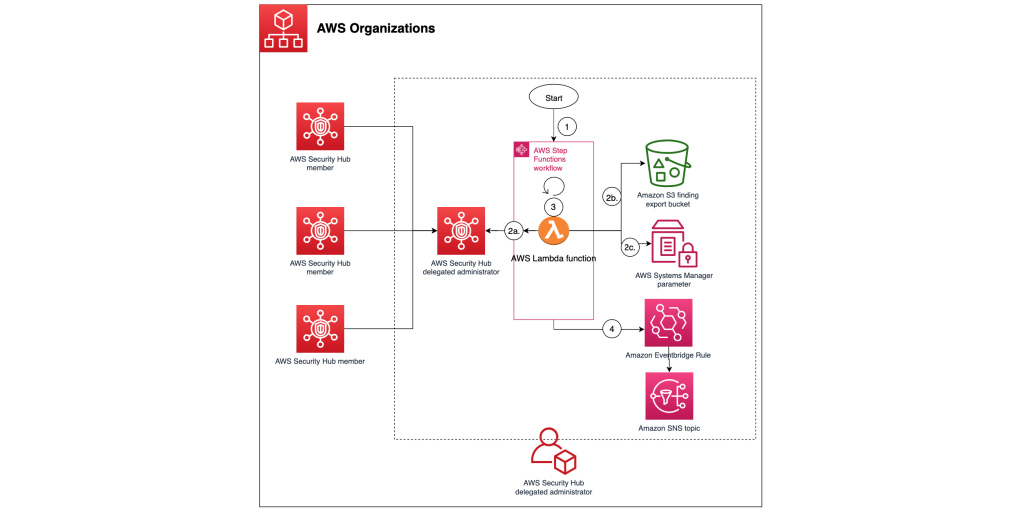
Export historical Security Hub findings to an S3 bucket to enable complex analytics
AWS Security Hub is a cloud security posture management service that you can use to perform security best practice checks, aggregate alerts, and automate remediation. Security Hub has out-of-the-box integrations with many AWS services and over 60 partner products. Security Hub centralizes findings across your AWS accounts and supported AWS Regions into a single delegated […]

New AWS whitepaper: Using AWS in the Context of Canada’s Controlled Goods Program (CGP)
Amazon Web Services (AWS) has released a new whitepaper to help Canadian defense and security customers accelerate their use of the AWS Cloud. The new guide, Using AWS in the Context of Canada’s Controlled Goods Program (CGP), continues our efforts to help AWS customers navigate the regulatory expectations of the Government of Canada’s Controlled Goods […]

IAM Access Analyzer makes it simpler to author and validate role trust policies
AWS Identity and Access Management (IAM) Access Analyzer provides many tools to help you set, verify, and refine permissions. One part of IAM Access Analyzer—policy validation—helps you author secure and functional policies that grant the intended permissions. Now, I’m excited to announce that AWS has updated the IAM console experience for role trust policies to […]

Announcing an update to IAM role trust policy behavior
April 16, 2024: Updated with information on AWS CloudTrail logging for roles that are still using the implicit trust behavior, and additional sample queries to find these roles. June 15, 2023: Enforcement has changed from a fixed date to an automated process starting June 30, 2023 that removed roles based on observed role assumption behavior. […]

Sign Amazon SNS messages with SHA256 hashing for HTTP subscriptions
Amazon Simple Notification Service (Amazon SNS) now supports message signatures based on Secure Hash Algorithm 256 (SHA256) hashing. Amazon SNS signs the messages that are delivered from your Amazon SNS topic so that subscribed HTTP endpoints can verify the authenticity of the messages. In this blog post, we will show you how to enable message […]

Top reasons to import a certificate into AWS Certificate Manager (ACM)
October 18, 2022: This blog post was updated and the title was changed to reflect the updated info. AWS Certificate Manager (ACM) is a service that lets you efficiently provision, manage, and deploy public and private SSL/TLS certificates for use with AWS services and your internal connected resources. Public certificates that you request through ACM […]

Amazon introduces dynamic intermediate certificate authorities
February 27, 2023: We’ve updated question and answer #3 on this blog post. October 7, 2022: This blog post has been updated to include a Frequently Asked Questions section at the end. September 30, 2022: This blog post has been updated to include the addition of the CN=Starfield Services Root Certificate Authority – G2,O=Starfield Technologies\, […]

Use AWS Network Firewall to filter outbound HTTPS traffic from applications hosted on Amazon EKS and collect hostnames provided by SNI
October 13, 2022: This post had been updated with diagram of Figure 1: Outbound internet access through Network Firewall from Amazon EKS worker nodes modified. This blog post shows how to set up an Amazon Elastic Kubernetes Service (Amazon EKS) cluster such that the applications hosted on the cluster can have their outbound internet access […]
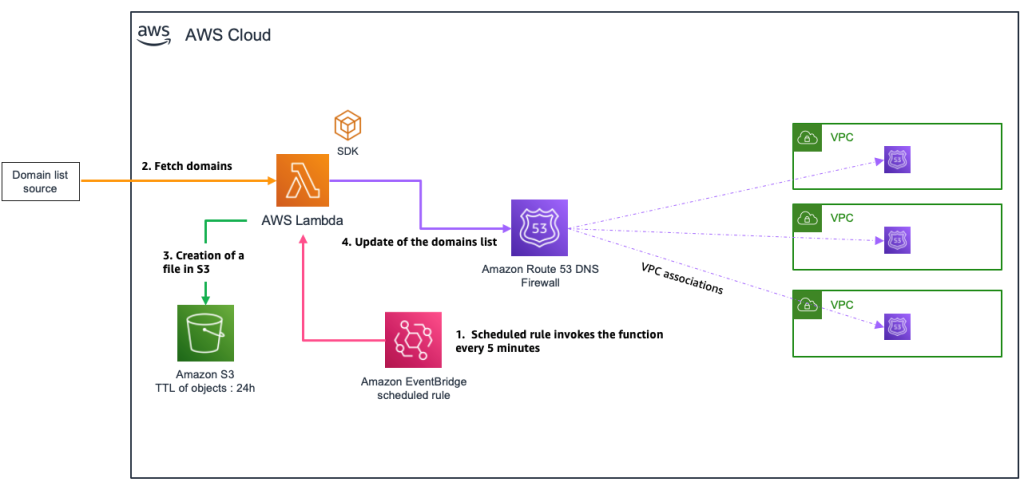
How to automate updates for your domain list in Route 53 Resolver DNS Firewall
Note: This post includes links to third-party websites. AWS is not responsible for the content on those websites. Following the release of Amazon Route 53 Resolver DNS Firewall, Amazon Web Services (AWS) published several blog posts to help you protect your Amazon Virtual Private Cloud (Amazon VPC) DNS resolution, including How to Get Started with […]