Migration & Modernization
AWS Transform: From migration to continuous modernization
A month ago, I shared our learnings from AWS Transform’s first year—4.5 billion lines of code processed, 1.6 million hours saved for customers. We’ve continued to scale rapidly: now at 7 billion lines of code and an estimated 2 million hours saved.
But it’s not just the numbers. I’m even more excited to share several capabilities we launched at the AWS New York Summit on June 17th that expand the breadth of migrations, improve the speed and accuracy of mainframe app modernization, and take tech debt management to its next stage: continuous modernization.
Our mission with AWS Transform is to help customers across the full lifecycle of migration and application modernization. Customers use Transform to accelerate cloud migrations, modernize applications spanning Windows, mainframe, and custom codebases, and automate code transformations at scale—from version and framework upgrades to language translations and organization-specific changes.
Cloud Migrations
1. AI Workloads Migration: Migrate from OpenAI, Gemini, and Anthropic to Amazon Bedrock
Enterprises that built generative AI applications using OpenAI, Google Gemini, or direct Anthropic APIs find that scaling to production demands more than a model endpoint. They’re migrating to Amazon Bedrock to gain IAM-based security, VPC endpoint isolation, prompt caching, Bedrock Guardrails, and unified operational tooling. But migrating AI workloads isn’t like switching a dependency version. Real codebases use multiple models for different tasks, wrap calls in frameworks like LangChain or CrewAI, and wire streaming and function calling deep into application logic.
AWS Transform now includes a model-to-model migration assessment that scans your codebase, identifies AI provider dependencies (OpenAI, Google Gemini, Anthropic, or open-source models via LiteLLM), and produces a comprehensive migration plan to Amazon Bedrock. The agent interactively maps your models to Bedrock equivalents, estimates cost savings, and generates an SDK migration guide tailored to your integration pattern.
What makes this different from find-and-replace migration tools: it understands architecture. A LangGraph StateGraph with conditional edges? It only swaps the LLM binding. A CrewAI crew with hierarchical delegation? It updates the LLM parameter, nothing else. Your graph topology, routing logic, and orchestration patterns remain unchanged. And it’s honest about gaps: if a capability has no Bedrock equivalent, the agent flags it and recommends partial migration rather than silently breaking functionality.
2. Storage Migration: Migrate block storage to Amazon FSx for NetApp ONTAP
AWS Transform already supports migration of block storage from any source vendor including NetApp, Dell, Pure Storage, and VMware environments to Amazon EBS as part of compute rehosting. Now, customers can also migrate any block storage source to Amazon FSx for NetApp ONTAP.
AWS Transform replicates block storage data directly to FSx for ONTAP volumes as part of the same migration wave that handles compute and network, eliminating the need for intermediate storage tools to simplify the migration workflow. Workloads that depend on ONTAP capabilities such as fast backup and recovery, space efficient data clones for development/test and lower TCO through built-in deduplication, get a fully managed path forward on AWS without changing how data is managed.
Mainframe app modernization
Broadly speaking, any modernization project follows five steps: analyze what you have, plan what to tackle, reverse-engineer the legacy app to define the work, write the modernized application, and test and deploy. We’ve been systematically enhancing how Transform simplifies and accelerates each stage—and at the New York Summit we introduced new capabilities that further speed up the entire process.
Portfolio-level analysis. One of the first steps is analyzing existing codebases to plan the effort. Previously, Transform provided deep insights at the application level; we’re now expanding that with portfolio-level analysis of your z/OS COBOL and PL/I workloads. This gives you a holistic view, so you can identify and catalog discrete business functions, then start modernizing one function at a time. You can prioritize projects based on complexity, core functionality, dependencies, and other parameters surfaced by this analysis.
From documentation to development-ready requirements. Once you’ve selected an application, the next step is reverse-engineering it to extract business rules and specifications so you can generate new code in modern, cloud-native architectures. Previously, Transform could extract business rules and technical documentation—compressing months of manual effort. But generating new code still required developers to manually map those extractions to code specifications.
Now we’ve taken this a step further. Transform not only generates the documentation, it produces development-ready requirements with full traceability, flowing directly into Kiro and other IDEs through MCP-based integrations. Transform extracts every business rule from legacy source code, builds detailed requirements across multiple dimensions of your application, and presents each with full evidence: exact file location, data access patterns, and execution path. Every requirement traces back to the source, so teams can audit any transformation decision to its origin. Developers pull requirements, generate code, and validate transformations entirely within Kiro, with full context maintained from assessment through deployment. Code generation preserves business logic one-to-one, making the transition from legacy to modern traceable and auditable at every step.
As you can see in the screenshot below, you can seamlessly move between Transform’s web app and the coding agent, navigating from legacy code to specs to new code in a single workflow.
This end-to-end approach compresses what previously took years of manual effort into months of automated, evidence-based modernization.
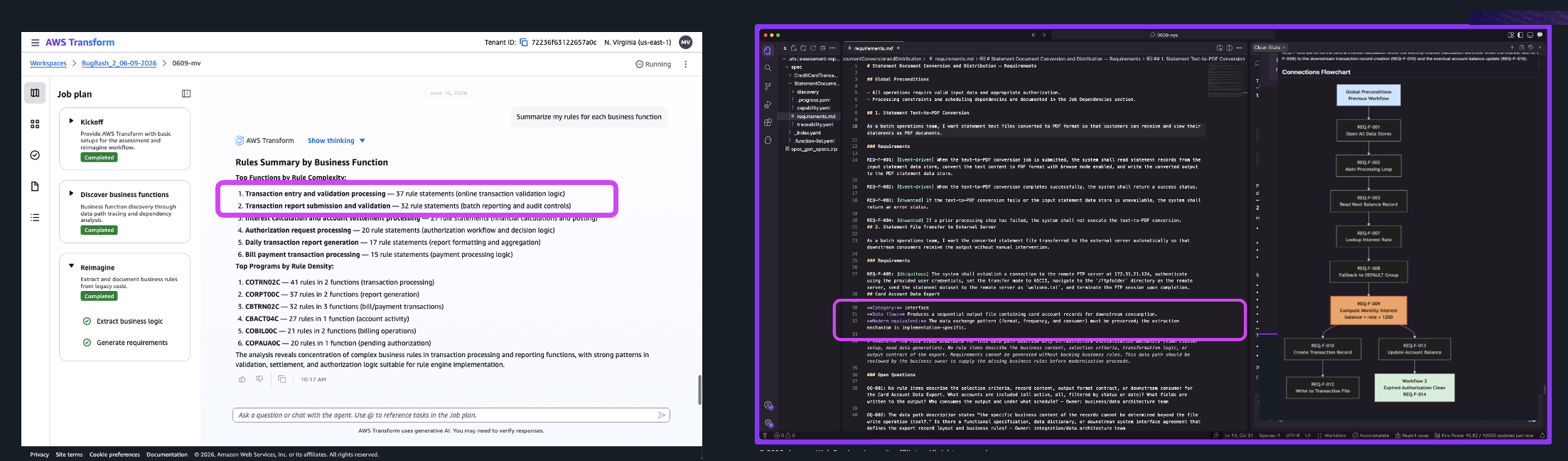
Figure 1. Mainframe app modernization with full traceability
Tech debt management and continuous modernization
Staying modern is as hard as getting modern. Enterprises spend 30% of engineering capacity on dependency updates, runtime migrations, and framework upgrades. Managing them as periodic campaigns is in constant tension with feature development.
At re:Invent 2025 we launched AWS Transform’s custom transformations, enabling customers to create transformations that upgrade frameworks, dependencies, APIs, and more. Customers created transforms for Java and Node.js upgrades, Lambda runtime migrations, and language translations like Progress 4GL to Java. We saw a repeated pattern—customers like Delta, and internally Twitch, using custom transformations to define and run campaigns spanning their full repositories.
Learning from this, we launched a public preview for continuous modernization: it scans thousands of repositories and surfaces issues like end-of-life dependencies and outdated frameworks. You can connect your repos and get full visibility into tech debt across your entire portfolio, prioritized by severity, with actionable remediation suggestions. Accept changes one by one, or set it to auto-remediate. And beyond keeping your code current, continuous modernization assesses and remediates your codebases for AI agents—ensuring your stack is ready for the agentic workloads your organization is building toward.
Customers and partners are already seeing results. Escala 24×7 scanned 12 repositories in under a minute and immediately surfaced critical Node.js end-of-life dependencies they hadn’t addressed – they now plan to embed continuous modernization into their standard onboarding process for every new managed services client, delivering remediation roadmaps on day one instead of month three. Storm Reply is using it across highly regulated environments where compliance and traceability are critical, giving teams a solid starting point for large-scale remediation rather than analyzing entire codebases from scratch. Coveo found the integration with AWS Batch made it straightforward to scale across their repositories, with plans to communicate security findings across their team in real time. And Accenture scanned more than 500 repositories and identified areas of technical debt in a fraction of the time, moving clients from months-long, manual analysis to AI-driven insights in minutes.
The screen below shows how leaders can use Transform’s web app to get a holistic view of their tech debt status. Individual developers can review PRs or go deeper from their coding agents.
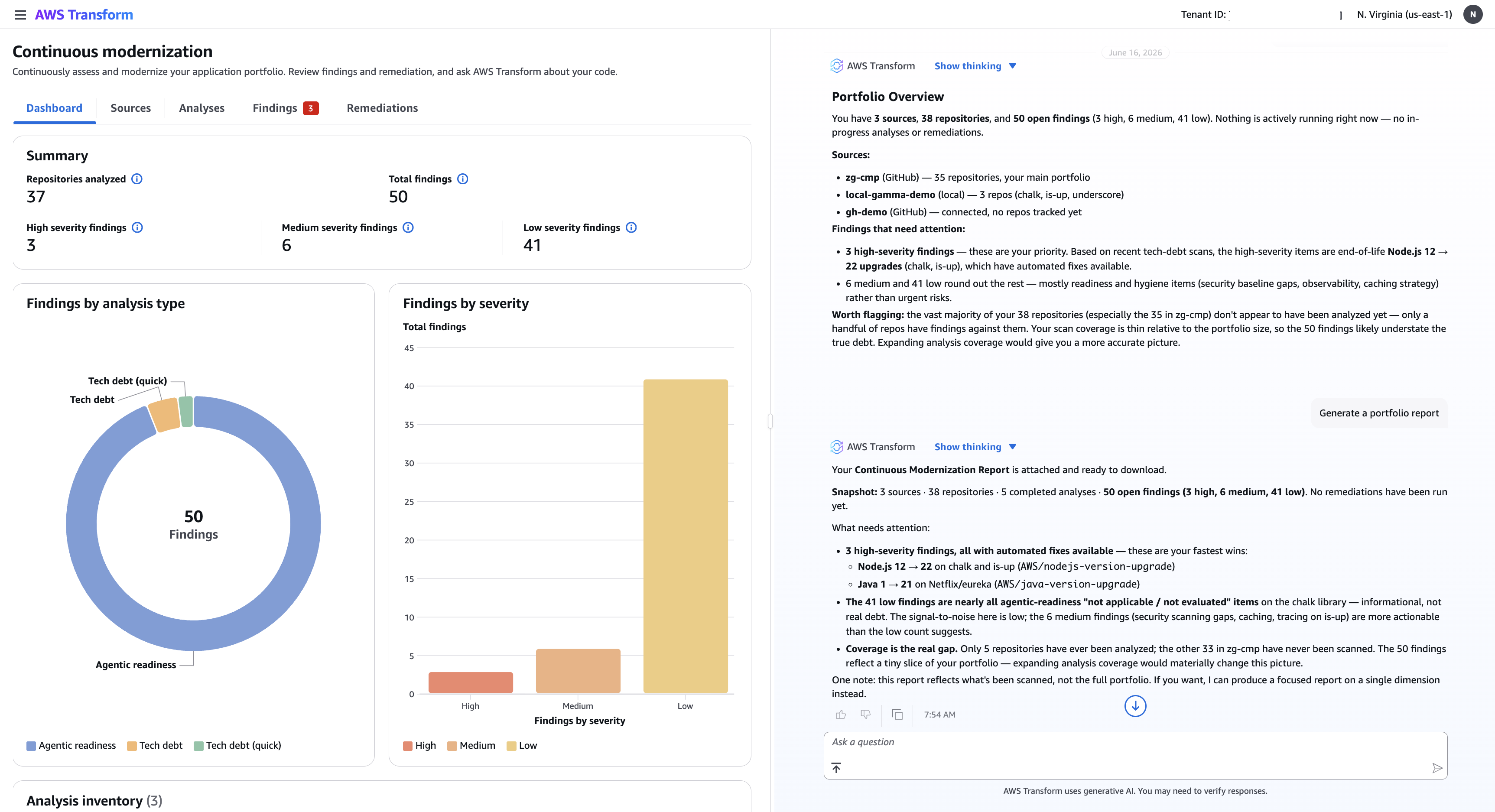
Figure 2. AWS Transform – continuous modernization
I remember the time when CI/CD became a thing, now we’re taking this to the next level – “CM” or continuous modernization.
Get started with AWS Transform at aws.amazon.com/transform.