AWS Database Blog

Migrating relational databases to Amazon DocumentDB (with MongoDB compatibility)
If your data is stored in existing relational databases, converting relational data structures to documents can be complex and involve constructing and managing custom extract, transform, and load (ETL) pipelines. Amazon Database Migration Service (AWS DMS) can manage the migration process efficiently and repeatably. With AWS DMS, you can perform minimal downtime migrations, and can replicate ongoing changes to keep sources and targets in sync. This post provides an overview on how you can migrate your relational databases like MySQL, PostgreSQL, Oracle, Microsoft SQL Server, and others to Amazon DocumentDB using AWS DMS.
Introducing transactions in Amazon DocumentDB (with MongoDB compatibility)
With the launch of MongoDB 4.0 compatibility, Amazon DocumentDB (with MongoDB compatibility) now supports performing transactions across multiple documents, statements, collections, and databases. Transactions simplify application development by enabling you to perform atomic, consistent, isolated, and durable (ACID) operations across one or more documents within an Amazon DocumentDB cluster. Common use cases for transactions include financial processes, fulfilling and managing orders, and building multi-player games. In this post, I show you how to use transactions for common uses cases.

Streaming data to Amazon Managed Streaming for Apache Kafka using AWS DMS
AWS Database Migration Service (DMS) announced support of Amazon Managed Streaming for Apache Kafka (Amazon MSK) and self-managed Apache Kafka clusters as target. With AWS DMS you can replicate ongoing changes from any DMS supported sources such as Amazon Aurora (MySQL and PostgreSQL-compatible), Oracle, and SQL Server to Amazon Managed Streaming for Apache Kafka (Amazon MSK) and self-managed Apache Kafka clusters.
In this post, we use an e-commerce use case and set up the entire pipeline with the order data being persisted in an Aurora MySQL database. We use AWS DMS to load and replicate this data to Amazon MSK. We then use the data to generate a live graph on our dashboard application.

Integrating Amazon ElastiCache with other AWS services: The serverless way
In this post, I describe a simple way to transfer data from ElastiCache for Redis clusters to other AWS database services using AWS Lambda functions.
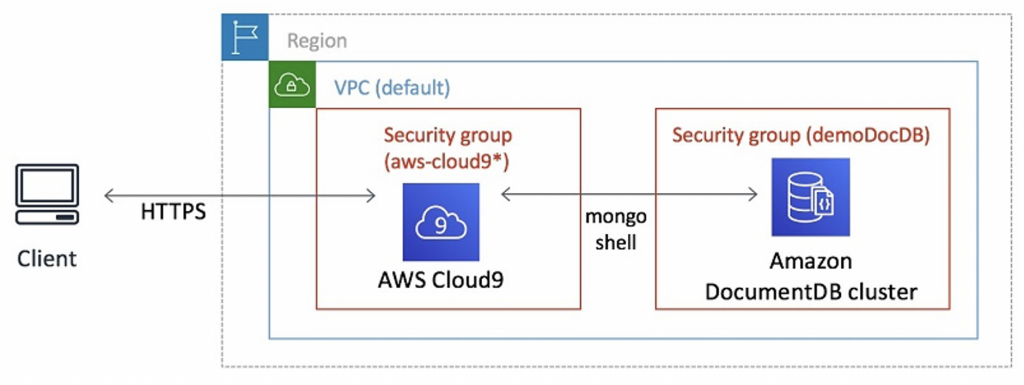
Introducing MongoDB 4.0 compatibility and Transactions in Amazon DocumentDB
This post summarizes what’s new in Amazon DocumentDB 4.0 and show you how to get started with Amazon DocumentDB 4.0 and transactions using an AWS Cloud9 environment.
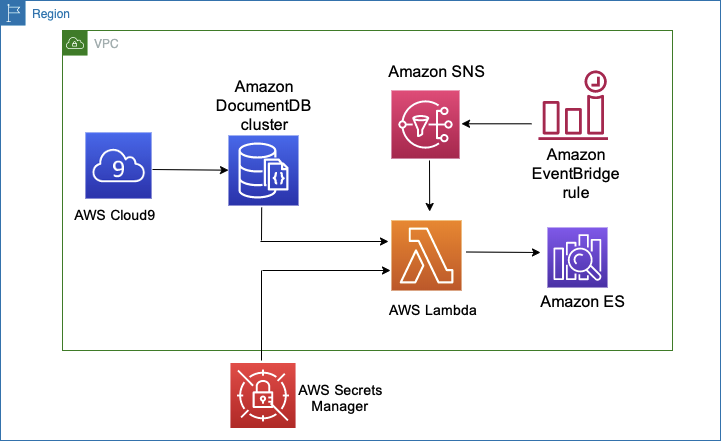
Run full text search queries on Amazon DocumentDB (with MongoDB compatibility) data with Amazon OpenSearch Service
In this post, we show you how to integrate Amazon DocumentDB with Amazon ES so you can run full text search queries over your Amazon DocumentDB data. Specifically, we show you how to use an AWS Lambda function to stream events from your Amazon DocumentDB cluster’s change stream to an Amazon ES domain so you can run full text search queries on the data.
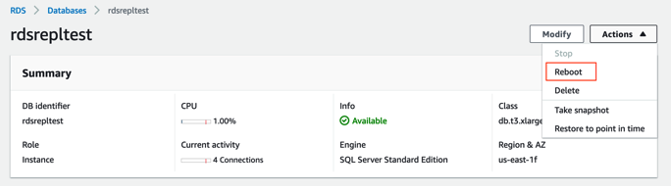
Migrating to Amazon RDS for SQL Server using transactional replication: Part 2
The purpose of this post is to maintain continuous transactional replication from an on-premises or Amazon EC2 hosted SQL Server instance to an RDS for SQL Server DB instance in the Multi-AZ configuration when a host replacement occurs during maintenance activities or failover events.
Using Database Mail on Amazon RDS for SQL Server
We’re happy to announce that Amazon RDS for SQL Server now fully supports SQL Server Database Mail. Before this release, you needed to use a variety of work-arounds to enable Database Mail, such as using linked servers. With the release of Database Mail for SQL Server, you can enable Database Mail seamlessly by using database parameter groups. Database Mail is one of the heavily used features in Microsoft SQL Server. Database Mail enables you to send messages from the SQL Server to users by using a Simple Mail Transfer Protocol (SMTP) server. In this post, you learn how to configure Database Mail and send emails from an RDS for SQL Server DB instance via Amazon Simple Email Service (Amazon SES).
Running Hyperledger Explorer on Amazon Managed Blockchain
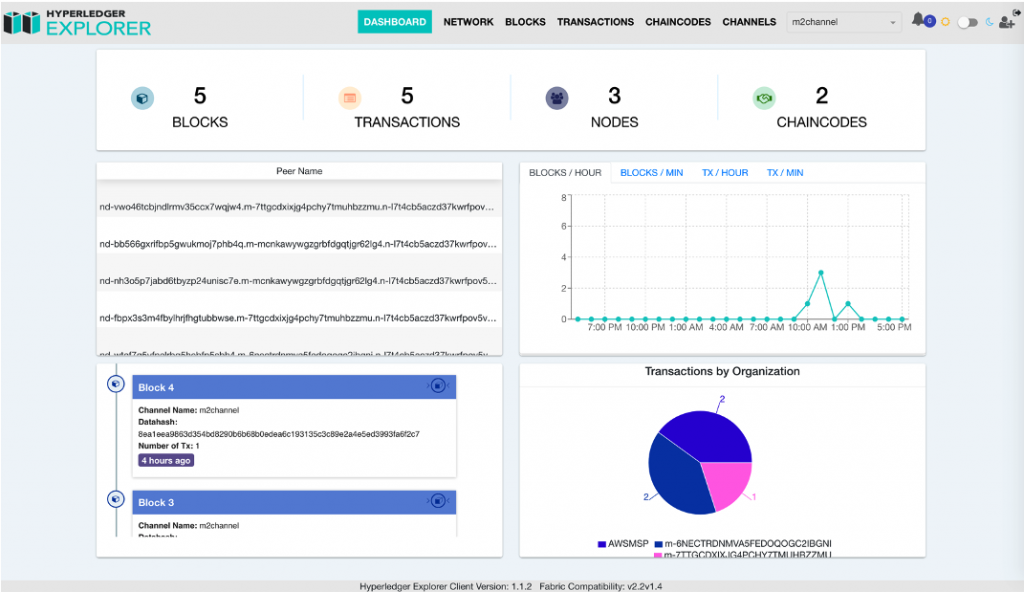
In the first post of this series, you learned how to build a Hyperledger Fabric network using Amazon Managed Blockchain. In this post, you deploy and run Hyperledger Explorer to visualize the Fabric network that you created.
Performing major version upgrades for Amazon Aurora MySQL with minimum downtime
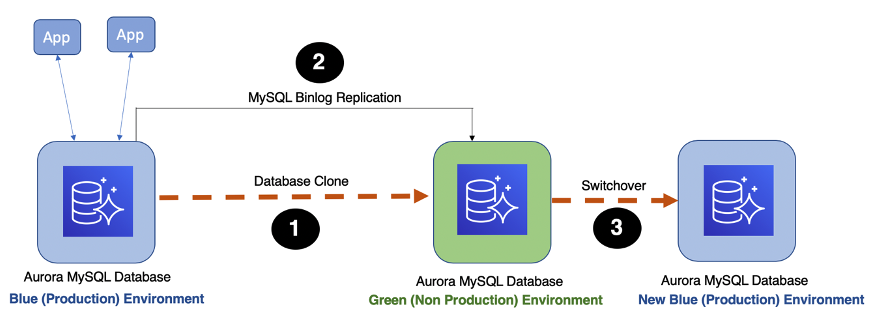
This post shows how you can perform a major upgrade for Aurora MySQL with minimal downtime using a blue-green deployment. This is useful for database administrators or DevOps team members responsible for the Aurora MySQL upgrades.