Scaling global game infrastructure using AWS Local Zones with Riot Games
Learn how video game developer Riot Games uses AWS Local Zones to deliver its games to players globally.
Benefits
ms or less latency for VALORANT players
ms or less latency for League of Legends players
Overview
Riot Games, the creator of popular titles such as League of Legends, VALORANT, Teamfight Tactics, and 2XKO, is committed to delivering exceptional gaming experiences wherever players are located. In gaming, milliseconds matter, and having game servers as close to players as possible minimizes latency. As Riot Games expanded globally, it relied on Amazon Web Services (AWS) to deliver elastic, on-demand compute in more locations. Riot Games strategically adopted AWS Local Zones, which are available in over 30 metropolitan areas worldwide to help bring infrastructure closer to end users and workloads. That approach has helped Riot Games extend its low-latency standard to more players—and achieve consistent performance while simplifying operations.
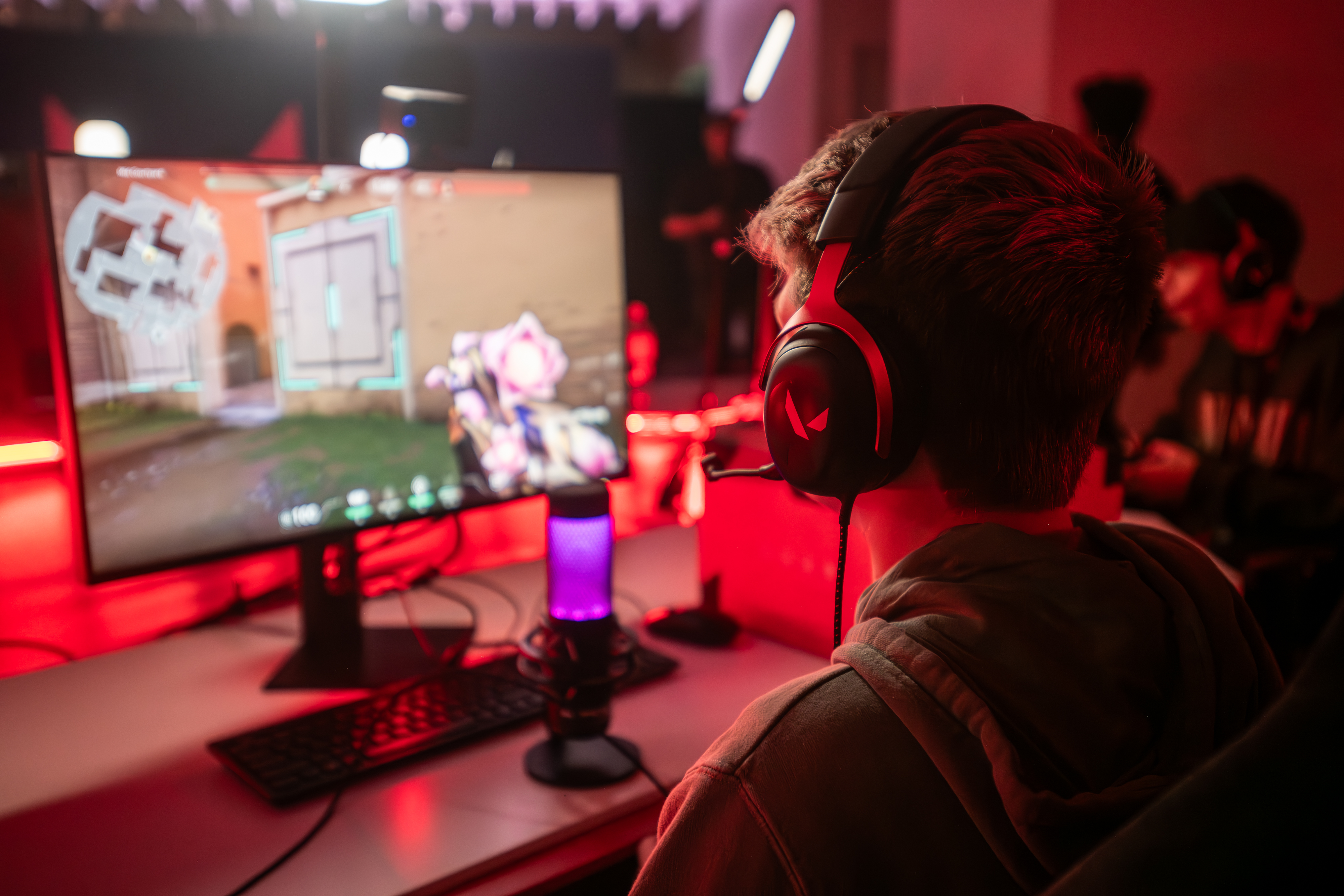
About Riot Games
Founded in 2006 and headquartered in Los Angeles, Riot Games develops and publishes video games, produces esports events, and creates entertainment content, all with a core mission of making it better to be a player.
Opportunity | Using AWS Local Zones to expand reach for Riot Games
Prior to adopting AWS Local Zones, Riot Games ran multiple titles on AWS, using a combination of AWS Regions and AWS Outposts—a family of fully managed services delivering AWS infrastructure and services to virtually any on-premises or edge location—to host game servers. Using AWS Outposts, the company can deploy AWS compute in its own data center spaces, filling gaps in locations where it needs low-latency access for players. Riot Games wanted the flexibility to provision additional capacity for peak player demand while paying only for the periods of active capacity use.
As AWS expanded AWS Local Zones in more locations, Riot Games saw an opportunity to modernize its infrastructure while maintaining its global footprint. AWS Local Zones offer the same elastic, on-demand compute as AWS Regions but also placed core AWS services closer to metropolitan areas worldwide. With this approach, the company could scale capacity based on player activity without managing physical facilities.
Solution | Deploying game servers closer to players worldwide
Riot Games developed a standardized global deployment model: Prefer AWS Regions when available, use AWS Local Zones to reduce latency when AWS Regions aren’t nearby, and rely on AWS Outposts where neither option exists today. As AWS Local Zones launched in new locations, the company migrated workloads from AWS Outposts—gradually shifting toward a more flexible model where AWS managed both the infrastructure and data center facilities.
Riot Games now runs latency-sensitive game servers across 17 AWS Local Zones worldwide. These servers host real-time gameplay for titles like VALORANT and League of Legends, where consistent, low-latency connections are essential—not only to maintain competitive integrity but also to give matchmaking systems better options for equalizing the experience across all players in a game.
The company deploys both game servers and supporting services using Amazon Elastic Kubernetes Service (Amazon EKS), which is used to build, run, and scale production-ready Kubernetes applications. These applications run as managed nodes on Amazon Elastic Compute Cloud (Amazon EC2) instances, which provide secure and resizable compute capacity for the underlying workloads. Because AWS Local Zones and AWS Regions share the same APIs and tools, Riot Games can use identical deployment processes across all locations.
“As a game team, we don’t have to think about whether our game is running in an AWS Local Zone, an AWS Outpost, or an AWS Region—it’s all the same to us,” says David Press, tech lead for League of Legends at Riot Games. “The fact that the infrastructure presents a very similar interface, along with consistent billing, tools, and services, is a huge win. For highly mature services running at scale, that consistency matters just as much. This empowers us to focus on our game rather than our infrastructure.”
To connect these distributed deployments to its Riot Direct network backbone, Riot Games uses AWS Direct Connect, a service that provides a dedicated network connection to AWS. Over the process of rolling out the global deployment model, Riot Games has worked closely with AWS support teams to plan capacity and coordinate launches.
“Our AWS technical account managers and solutions architects are working alongside us as we launch new games and in new AWS Local Zones,” says Press. “This makes us feel like collaborators rather than just customers.”
Outcome | Delivering low-latency player experiences globally
By adopting AWS Local Zones, Riot Games has achieved consistent sub-35 ms latency for VALORANT players and sub-70 ms latency for League of Legends players in supported metropolitan areas. For example, in Türkiye—a high-growth country—Riot Games uses the AWS Local Zone in Istanbul to bring low-latency gameplay to the country's thriving gaming community. This has unlocked significant new capacity for a rapidly growing player base.
By using the elastic, on-demand model of AWS Local Zones, Riot Games has reduced annual infrastructure spending by millions of dollars. With automatic scaling, the company no longer pays for idle capacity during off-peak hours, and has access to newer Amazon EC2 instance types that deliver improved price performance. As AWS expands its global footprint, Riot Games can enter new locations faster without building out its own data center presence.
For the company’s game developers, standardized deployments across AWS Local Zones and AWS Regions have streamlined operations. Teams can focus on creating games rather than managing infrastructure. “We want to deliver the best possible player experience and solve real player problems, and that means investing in infrastructure,” says Press.

Our AWS technical account managers and solutions architects are working alongside us as we launch new games and in new AWS Local Zones. This makes us feel like collaborators rather than just customers.
David Press
Tech Lead for League of Legends, Riot GamesAWS Services Used
Did you find what you were looking for today?
Let us know so we can improve the quality of the content on our pages