
Sold by: Palantir Technologies
Deployed on AWS
Palantir Platform empowers organizations to effectively integrate their data, decisions, and operations.
4.1
Overview
Palantir Platform is accessible via private pricing only. The public price for Palantir Platform is a placeholder and actual payment may be different than the listed amount, depending on many factors. If you are interested in purchasing Palantir Platform and not already in contact with a sales representative, please get in touch with us at https://www.palantir.com/contact/get-started/
Palantir Platform empowers organizations to effectively integrate their data, decisions, and operations. This technology, forged through years of direct experience with complex institutional data challenges, re-unifies companies around their central mission. It enables them to become fully digital connected companies.
Highlights
- Data Operationalization
- Multi-System Connectivity
Details
Sold by
Categories
Delivery method
Deployed on AWS
New
Introducing multi-product solutions
You can now purchase comprehensive solutions tailored to use cases and industries.

Features and programs
Trust Center

Access real-time vendor security and compliance information through their Trust Center powered by Drata or Vanta. Review certifications and security standards before purchase.
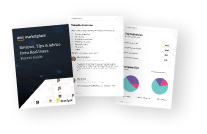
Buyer guide
Gain valuable insights from real users who purchased this product, powered by PeerSpot.
Financing for AWS Marketplace purchases
AWS Marketplace now accepts line of credit payments through the PNC Vendor Finance program. This program is available to select AWS customers in the US, excluding NV, NC, ND, TN, & VT.

Pricing
Pricing is based on the duration and terms of your contract with the vendor, and additional usage. You pay upfront or in installments according to your contract terms with the vendor. This entitles you to a specified quantity of use for the contract duration. Usage-based pricing is in effect for overages or additional usage not covered in the contract. These charges are applied on top of the contract price. If you choose not to renew or replace your contract before the contract end date, access to your entitlements will expire.
Additional AWS infrastructure costs may apply. Use the AWS Pricing Calculator to estimate your infrastructure costs.
Dimension | Description | Cost/month | Overage cost |
|---|---|---|---|
Foundry Unit | Foundry Subscription Unit | $100,000.00 |
Vendor refund policy
Refund Policies are subject to direct agreements between the customer and Palantir

Legal
Vendor terms and conditions
Upon subscribing to this product, you must acknowledge and agree to the terms and conditions outlined in the vendor's End User License Agreement (EULA) .
Content disclaimer
Vendors are responsible for their product descriptions and other product content. AWS does not warrant that vendors' product descriptions or other product content are accurate, complete, reliable, current, or error-free.
Delivery details
Software as a Service (SaaS)
SaaS delivers cloud-based software applications directly to customers over the internet. You can access these applications through a subscription model. You will pay recurring monthly usage fees through your AWS bill, while AWS handles deployment and infrastructure management, ensuring scalability, reliability, and seamless integration with other AWS services.
Resources
Vendor resources
Support
Vendor support
Please contact your Palantir representative for additional assistance.
AWS infrastructure support
AWS Support is a one-on-one, fast-response support channel that is staffed 24x7x365 with experienced and technical support engineers. The service helps customers of all sizes and technical abilities to successfully utilize the products and features provided by Amazon Web Services.
Updated weekly
By Palantir Technologies
By Cloudera
By Collibra
Sentiment is AI generated from actual customer reviews on AWS and G2
Functionality
Ease of use
Customer service
Cost effectiveness
Positive reviews
Mixed reviews
Negative reviews
AI generated from product descriptions
Data Integration and Operationalization
Enables integration of organizational data across multiple systems and operationalizes data for decision-making and operational processes
Multi-System Connectivity
Provides connectivity across multiple disparate systems to create unified data access and operations
Enterprise Data Unification
Re-unifies organizational data and operations around central mission objectives through integrated platform architecture
Digital Transformation Enablement
Supports transformation of organizations into fully digital connected entities through integrated data, decisions, and operations
Complex Institutional Data Management
Handles complex institutional data challenges through purpose-built technology designed for enterprise-scale data environments
Workload Auto-scaling
Intelligently autoscales workloads up and down across hybrid and public cloud environments for optimized cloud infrastructure utilization.
Multi-function Analytics Platform
Provides integrated data warehouse, machine learning, and custom analytics capabilities with unified analytic functions to eliminate data silos.
Shared Data Experience (SDX)
Implements security and governance policies that are set once and applied consistently across all data and workloads, with portability across supported infrastructures.
Data Lifecycle Management
Manages complete data lifecycle functions including ingestion, transformation, querying, optimization, and predictive analytics across multiple cloud environments.
Unified Security and Governance
Ensures all workloads share common security, governance, and metadata with capabilities for data discovery, curation, and self-service access controls.
AI Governance Framework
Active metadata-based governance with rules, processes and responsibilities to ensure ethical AI practices, mitigate risk, adhere to legal requirements, and protect privacy
Automated Data Lineage
End-to-end lineage tracking providing transparency into data transformation and flow across systems, including both summary-level business lineage and detailed technical lineage
Unified Data Catalog
Multi-cloud and hybrid environment data discovery with business context including data origin, ownership, usage patterns, and access to reports, AI models and data products
Data Quality Automation
Automated monitoring and rule management system for enterprise-wide data quality management replacing manual processes
Privacy and Compliance Workflow
Centralized automation of privacy workflows to operationalize privacy requirements and address global regulatory compliance
Standard contract
No
No
No
Customer reviews
reviewer2846064
Data platform has unified global operations and has accelerated data‑driven decisions
Reviewed on Jun 12, 2026
Review provided by PeerSpot
What is our primary use case?
Palantir Foundry serves as our data platform for the company, which means we have numerous use cases and business cases that cross all the different business groups, subsidiaries of the company, and also different support functions and business functions of the corporate. We have more than 200 use cases in the corporate because Forvia is a very big company. The main use case is to enable the data value and data product for our corporate and for our business.
The main purpose of the data platform is to have a good return on investment based on IT digital dependencies. From a business point of view, I will give you a good example of purchasing. For the purchasing side, purchasing has two types: direct purchasing and indirect purchasing. Especially for the direct purchasing part, previously, we could not know that all the purchasing data management was quite siloed. With Palantir Foundry , we break the data silo to make all the different data which comes from the purchasing department globally, which have acceleration with the data sourcing assistant and AI sourcing assistant, to help our business accelerate their purchasing business transformation and to achieve excellence in terms of purchasing goods price. This helps us, at the same time, to speed up for the purpose of time saving, and it helps our business to accelerate all the price transformation strategy with our suppliers. That is a good benefit.
Not only for the purchasing part, it is also for the processing side in the operation and for the industrial operation, because Forvia is a manufacturing company. We have many data use cases in the plant. Globally, we have 500 plants and factories globally, which have many critical operations on the factory plant side. For example, the predictive maintenance with the data coming from the shop floor from the plant side helps us to have a good level of understanding of the different machine statuses of the plant.
How has it helped my organization?
This is the data-driven enterprise strategy. Since five years ago, we started our data program and launched the data-driven enterprise. This strategy has changed our HR organization, meaning we need to apply change management to accelerate because we are facing the change of data and AI. With Palantir Foundry, it helps us to accelerate this change management in our corporate, which is quite positive.
Time saving, budget saving, and cost reduction are benefits we have experienced, along with accelerating decision-making for the target, because Palantir Foundry with the data is quite useful. It helps management make the right decisions in the market, especially in the current situation where all the competition in the automotive market is quite complex. With Palantir Foundry, it helps us have better benefits and better return on investment, and also accelerates the right decision in the market.
What is most valuable?
There are three good features which we have applied until today in Palantir Foundry. The first one is, of course, all the data product features from Palantir Foundry, with all the different data pipelines, which helps us to have end-to-end data product experience with Palantir Foundry. The second one, relative to the previous benefits about data product, is that we have a good level of data ontology, which is a data catalog that helps the business people to understand better their data in a functional way. The third part is the AIP usage, because Palantir Foundry has the AIP feature, AI platform feature. With AIP features, we could accelerate our AI transformation and also develop our own AI agent with Palantir Foundry.
What needs improvement?
Palantir Foundry needs two points for improvement regarding the data product. First, Palantir Foundry needs to improve their clear resume about their product features roadmap. Second, Palantir Foundry needs to have a closer connection with the enterprise corporate application, which means the business application, because big companies have a very huge ecosystem of business applications. In my personal perspective, I think Palantir Foundry still has some space to improve in integrating with the IT landscape of the corporate.
I want to say that Palantir Foundry is quite expensive. It is not so easy for budget review and budget transformation of the company, which is quite expensive.
For how long have I used the solution?
In terms of my experience with Palantir Foundry, I have been using the Foundry product from Palantir for more than five years already.
What do I think about the stability of the solution?
It is stable.
What do I think about the scalability of the solution?
The scalability is good, but we need to pay for the compute and the resource.
How are customer service and support?
The customer support is fine. We have the Forward Deployment Engineer, FDE, with us on site, but once again, it is quite expensive for the daily price of the FDE engineer. I think we need to rely on classical support by using a ticketing system of Palantir.
Which solution did I use previously and why did I switch?
We previously had Cloudera in the company as the data lake solution.
How was the initial setup?
At this stage, it is fine.
What about the implementation team?
We don't have a migration plan.
What was our ROI?
I cannot give you the details of the money saved because it is quite confidential. What I can tell you is that return on investment is quite good, but Palantir Foundry is quite expensive and it is difficult to have a good budget for Palantir Foundry. That is the reality.
What's my experience with pricing, setup cost, and licensing?
At this stage, it is fine.
Which other solutions did I evaluate?
At this stage, it is fine.
What other advice do I have?
I have two suggestions for other companies looking to use Palantir Foundry. First, you need to understand how Palantir Foundry integrates with your IT system landscape before choosing to use Palantir Foundry. Second, you need to define and design good governance for Palantir Foundry usage for your data platform. I have rated this review with a score of 8.
SubhanReza
Unified data workflows have improved end-to-end analytics but the interface has remained monotonous
Reviewed on Jun 08, 2026
Review provided by PeerSpot
What is our primary use case?
Palantir Foundry serves as our primary SaaS platform, providing a single platform where we integrate our data, create data connections, retrieve the data, and build transformations on top of that.
We then create visualizations and reporting by creating Workshop applications or Contour analysis.
In my recent project, we had all those data and reports in the old on-premises system, QlikView . We migrated all that data along with the workflow and dashboards onto Palantir Foundry .
We created all those datasets in Code Repository by ingesting raw data and creating data connections from different sources such as SAP sources and other sources. We then consolidated all that data and performed transformation.
On top of that, we created a workflow using Pipeline Builder, and then we fed that data into the ontologies and created the dashboards in Workshop applications.
This was the entire end-to-end workflow.
What is most valuable?
Palantir Foundry provides a good platform where we can integrate two different data sources and pull all that data together.
We can find business use cases on top of that by creating applications or dashboards for analysis, supply chain workflow, or any kind of business value we want to find out.
It's a very good platform where we can do all those things on a single platform.
Currently, I believe that integrating AI models and an AI agent on top of the ontology is valuable. This is the best thing that Palantir has launched recently.
What needs improvement?
The theme is very monotonous and should be improved. Analytics and data engineering platforms such as Databricks and other tools have a very good UI and theme.
Palantir Foundry should work on improving this aspect.
In terms of data integration, we have to create an agent and similar functionality.
If Palantir were able to add more connectors, it would be really helpful. These are some areas where they can improve.
For how long have I used the solution?
I have been using Palantir Foundry for the last three years.
What do I think about the stability of the solution?
Palantir Foundry is very stable.
What do I think about the scalability of the solution?
We can increase the cluster or the kind of CPU and computation we want.
For storage, we obviously get a kind of S3 bucket, so this aspect is fine.
How are customer service and support?
In my organization, we have a monthly call with Palantir support where we can sometimes find solutions from them.
For example, they support us on a few new, latest changes made by Palantir or if they are sunsetting any tools.
Which solution did I use previously and why did I switch?
Earlier, we had a lot of legacy systems for big data processing. Sometimes we did not find the right skill set to deal with all that infrastructure, and it was taking a lot of time and cost for our organization.
When we switched to Palantir Foundry, it became a single platform which we could use for our entire analytics and data engineering workflow.
This was the best thing, where we get all the advantages of other platforms in a single place.
When we were dealing with Excel-based or Midas systems, there were a lot of challenges.
Sometimes we were lagging in data correctness or updated data while we had a reporting call or our weekly performance call.
Sometimes we did not get the updated data, and sometimes we were lacking in terms of correctness.
After we automated the entire workflow on Palantir Foundry, it ran really well in terms of time and correctness, and also data quality.
Palantir Foundry has many options, such as data expectancy checks, schedules, time checks, and health checks, which guarantee data correctness and data quality.
What other advice do I have?
Transformations were taking so much time to perform and run.
When we used Spark-based transformation in Code Repository and applied optimization techniques, it helped significantly.
We reduced the time by fifty percent, and it was a great achievement for us in that project.
We should definitely check Palantir Foundry out once, as it can be really helpful for the business.
Mitchell Lebold
Unified data views have improved collaboration but created reliance on external experts
Reviewed on Jun 05, 2026
Review from a verified AWS customer
What is our primary use case?
My main use case for Palantir Foundry involves building data pipelines, creating workshop apps, and constructing Gaia maps.
Another example of my main use case with Palantir Foundry is obtaining different data sources and combining them so that they can be visualized either in a workshop app or a Gaia map.
How has it helped my organization?
The unified picture is important for improved collaboration and decision-making in my organization, as that is the ultimate goal of a tier one organization in the Department of Defense and it is crucial to communicate to lower echelons effectively.
What is most valuable?
The best features Palantir Foundry offers include the ability to bring in multiple data sources into one spot and also host models that I can either bring or models Palantir already has access to, then combine them into a global ontology.
Combining data sources and hosting models in Palantir Foundry has helped my work because it is convenient to work in one environment rather than moving from one application to another, as Palantir Foundry allows for that one-stop shop where I can accomplish much of the work.
What needs improvement?
Palantir Foundry can be improved with better documentation, more robust training, and enhancements for working through transformations that are not accepted by the ontology. Additionally, the connection between Foundry and Gotham is not clear, and managing objects in Gotham lacks good documentation and training, leading to frustration. Using a regular database with a third-party application might provide a solution without being tied to the ontology.
Another drawback of the ontology is that it creates an additional step along the provenance of the data, which can slow things down or change what that data actually is once it reaches the end user.
Always having to work with a Palantir representative creates severe bottlenecks and increases costs, making it desirable for me as the end user to perform tasks without constant requests for support.
I would like to see a reduction in the need for field service representatives from Palantir, and I hope for a more intuitive architecture that makes it easier to find things and perform tasks without a high learning curve.
For how long have I used the solution?
I have been working as a data scientist for six years.
What do I think about the stability of the solution?
I find that Palantir Foundry is stable sometimes.
What do I think about the scalability of the solution?
The scalability of Palantir Foundry seems to be fairly good, considering how many users we have. It still operates well without significant lag in performance, so the scalability seems to be acceptable.
How are customer service and support?
The customer support can be frustrating, depending on where I am working from, especially if the demand signal needs resolution from a Palantir representative.
Which solution did I use previously and why did I switch?
We did not use a unified solution before.
What was our ROI?
My general impression is that it has not paid for itself yet, as it is a very expensive platform to use and the government is still fairly early in utilizing Palantir products. I would say that we have not received a good return on investment yet.
Which other solutions did I evaluate?
I did not evaluate any other options before choosing Palantir Foundry, as the choice was not mine to make. I was not responsible for selecting Palantir.
What other advice do I have?
My advice to others looking into using Palantir Foundry is to seriously consider the cost of using it and whether you are comfortable relying on a Palantir representative to complete your work or if you think you can manage without any Palantir representation. Additionally, consider if your solution can follow a different path and make a comparison. My overall rating for this product is seven out of ten.
Which deployment model are you using for this solution?
Public Cloud
If public cloud, private cloud, or hybrid cloud, which cloud provider do you use?
reviewer2849382
Modernized data workflows have accelerated predictive maintenance and still need deeper AI control
Reviewed on Jun 05, 2026
Review from a verified AWS customer
What is our primary use case?
My main use case for Palantir Foundry is to modernize the data infrastructure. One of the modernization projects I have worked on involved getting all the telemetry data collected from IoT devices that had been sitting in the field and then streaming it to Foundry while using the AIP capabilities to perform predictive maintenance and forecast performance degradation of the metrics. This allows the AIP agents to send out remote fixes to address the actual issues.
Palantir Foundry helps with predictive maintenance and forecasting performance degradation by providing a layer of abstractions so that I do not have to worry about piecing together all the different frameworks. Rather, everything is integrated beneath Foundry and the AIP. I can focus on the data part, integration, and data integrity, which means I worry less about modeling and optimization.
In my recent project work, I have been extending all the AIP agents to derivatively send remote fixes. Rather than keeping autonomous operations confined within the platform, the agents can now interact with the real world to fix issues or conduct extended analysis so that the issue can be briefed in the ontology.
What is most valuable?
Palantir Foundry's best features include AIP, specifically its AIP capabilities. What stands out to me about the AIP capability is how well the data is tightly integrated, allowing me to ingest the data and then hydrate my ontology with context-rich data. Beneath this layer, the ontology creates its own semantic layer so that I do not have to connect all the dots. Rather, the AIP agent itself can look at the complete ontology and has its very own access, so I do not have to be feeding anything specific. Instead, I can give complete connected dots to my AI agents.
Palantir Foundry has positively impacted my organization by enabling us to gain traction from different industries and different companies across various sectors. Since PwC operates as a service-based company, we can pull out massive deals from those companies across various industries, making this a positive service implementation I have noticed in my company.
It has definitely increased the project delivery timeline, so now it does not take weeks or months to deliver a project but rather just days for the development efforts. This allows us to look ahead and spend more time with the business on actually understanding the problem rather than spending most of the time developing the solution itself.
What needs improvement?
Palantir Foundry could noticeably improve in providing visibility over the different layers beneath Apollo or the platform itself. Whenever an issue arises with a pipeline or an AIP agent that runs away with all the tokens, I do not feel enough visibility beneath the layers to dive deep into tracking the issue and then mitigating it.
The problem with the AI capability is that whenever I spin up an agent that goes and drags documentation, I feel less control over its actions. Since everything is tied together in the ontology, I really have a less structured and integrated way that I can intervene.
Customer support should definitely be a concern, especially for the dev tier account I have been using, while for a corporate account, it is pretty good.
For how long have I used the solution?
I have been using Palantir Foundry for three years.
What do I think about the stability of the solution?
Palantir Foundry is generally stable, though sometimes when the data gets finicky, the Palantir pipelines or the ETL abstraction that the pipeline has breaks, making it hard to decode all the metrics and trace back the error.
What do I think about the scalability of the solution?
I have not faced any issues with scalability, especially during long-running compute. However, sometimes it depends on the region where the subscription is deployed, which might lead to some temporary degradation. The issues usually get fixed within an hour or so.
How are customer service and support?
Customer support should definitely be a concern, especially for the dev tier account I have been using, while for a corporate account, it is pretty good.
Which solution did I use previously and why did I switch?
I did not previously use a different solution and was fully utilizing open-source frameworks and languages.
How was the initial setup?
The setup cost and licensing are all simple, and with the documentation, I can literally navigate through a series of steps and then set up my own organizations.
What was our ROI?
Palantir Foundry has dramatically helped us in terms of project costing because earlier we had our own React developers team from offshore. Now with the AIP capabilities launched on the platform, we have completely avoided the need for a dedicated team. This has been very helpful in terms of cost management and reducing team size.
What's my experience with pricing, setup cost, and licensing?
The pricing is a bit on the higher side.
Which other solutions did I evaluate?
Before choosing Palantir Foundry, I evaluated Azure Foundry. Since it was under development and in its early stage at that time, Palantir Foundry was beating it in its own game and was way ahead of Azure .
What other advice do I have?
The accuracy and reliability of Palantir Foundry's AI output is pretty great. All those aspects are good, especially the documentation, which is so good that I can literally debug myself without looking for a long video that requires extended viewing time.
My advice to others looking into using Palantir Foundry is to get hands on with the platform and explore all its applications and the products that are available, as it is going to save a lot of time and money. I would rate this platform a 7 out of 10.
Which deployment model are you using for this solution?
Private Cloud
If public cloud, private cloud, or hybrid cloud, which cloud provider do you use?
reviewer2848908
Data dashboards have transformed defect tracking and project performance analysis across programs
Reviewed on Jun 05, 2026
Review from a verified AWS customer
What is our primary use case?
In my job, I use Palantir Foundry exclusively to create multiple dashboards. For example, I use Palantir Foundry to create a dashboard corresponding to the visualization of many charts by extracting the dataset, which is Skywise, putting this dataset in ontology, and using the different tools in Palantir Foundry. This is my typical use case in my job.
My last dashboard created with Palantir Foundry is regarding the Project Speed Project Dashboard, which helps analyze more programs because this dataset comes from Skywise, where my principal customer is Airbus. This project clarifies all the X-tracker, enabling tracking of multiple defects in programs such as the A320, and visualizing all action plans for non-quality across multiple programs. This is my first job for the dashboard speed, where I also plan to add, modify, and delete actions we want to track including all performance analysis for the high to left performance.
What is most valuable?
The best feature that Palantir Foundry offers in my experience is the Ontology Manager, which stands out to me because it allows us to see if we have the write-back dataset to understand what to add, delete, or modify in our dashboard and it displays our modifications in materialization, which is very good. Another aspect in ontology is that we have the possibility to update manually and see changes very quickly, which is a good feature that I apply and use in Palantir Foundry.
The Ontology Manager has helped me create an object or action, for example, using TypeScript, which is new for me, and it allows me to point to the Ontology Manager or the object type in the slate very quickly.
The Ontology Manager positively impacts my organization across all projects because it incorporates new technology and features that can be applied globally, making the impact on my work and organization very high.
What needs improvement?
I cannot provide specific outcomes or metrics on how Palantir Foundry has made a difference because in all my projects, I am the only developer and do not interact with other developers, only interacting with the customer, who is not a developer. Thus, I cannot see the difference at this time, as I am the sole developer on all my projects.
I want to pass the certification of Palantir Foundry because it is not easy to find the information regarding this certification, making it not accessible for many people, which I think is not good. If it is possible to plan for accessibility to this certification, it would greatly benefit many individuals.
For how long have I used the solution?
I have nine years of experience in Palantir Foundry, which I used during my first internship and during my master's degree at the University in Nice Sophia Antipolis.
What other advice do I have?
If I pass the certification, it would be the best thing for me as a Data Engineer, especially the Data Engineer Professional Palantir Foundry certification, which I consider important for my career.
I always take time to explore all aspects of Palantir Foundry, including the Ontology Manager, object set, object viewer, and object explorer, which I find valuable. Palantir Foundry has improved with the generation of AI, and I think the governance and security are both good things to have in Palantir Foundry.
I find that the AI capabilities of Palantir Foundry provide great accuracy and reliability, comparable to tools such as ChatGPT and Google Gemini , indicating strong output in terms of accuracy and reliability.
My advice for others looking into Palantir Foundry is to pass the certification, which I believe is very important to demonstrate that one's experience is applicable and valuable in exploring everything that Palantir Foundry has to offer. I rate Palantir Foundry a nine out of ten because I have a good experience and find working in Palantir Foundry very easy, as it offers many possibilities for growth and cooperation with people from all over the world.
Which deployment model are you using for this solution?
Private Cloud