AWS Spatial Computing Blog
Category: Thought Leadership

Accelerating OpenCV on Graviton – the COOL framework
Introduction Computer vision workloads are compute-intensive and expensive, forcing developers to choose between performance and cost when processing millions of images for applications ranging from autonomous vehicles to medical diagnostics. OpenCV (Open Computer Vision) is an open-source library designed to make computer vision and image processing fast, easy to use, and portable. It’s one of […]

Simulating Expert Teams with Agentic AI and Amazon Bedrock AgentCore
Introduction Answering technical questions that span multiple specialties is rarely just about finding the right answer. One of the hardest parts is often coordinating the right people to provide it. What if AI could augment this coordination—not by replacing expert teams, but by accelerating their initial research and synthesis? When complex technical questions span multiple […]

Spatial Computing Podcast Launch Announcement
Introducing “The 3D Podcast: Spatial Computing on AWS” – Where Immersive Technology Meets Cloud Innovation We’re thrilled to announce the launch of “The 3D Podcast: Spatial Computing on AWS,” a new show dedicated to exploring the cutting-edge intersection of spatial computing and cloud technology. In an era where digital experiences are becoming increasingly immersive and […]

From Local to Global: Scaling 3D Pipelines with AWS and RapidPipeline
At DGG, our mission has always been to help enterprises scale their 3D data workflows, fast, reliably, and at production scale. With the upcoming launch of our new RapidPipeline plugins at SIGGRAPH 2025, we’re opening the door to seamless integration with the tools 3D professionals already use, and setting the stage for scalable, cloud-first workflows […]
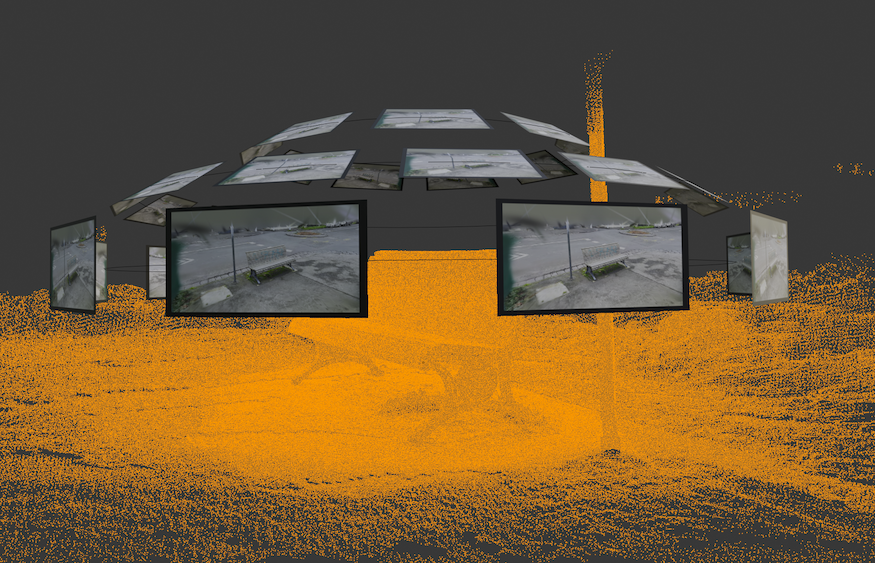
3D Gaussian Splatting: Performant 3D Scene Reconstruction at Scale
August 28, 2025: The instructions in this blog post have been implemented in an AWS Solution, Guidance for Open Source 3D Reconstruction Toolbox for Gaussian Splats on AWS, that includes an end-to-end pipeline for 3D reconstruction that is deployable via AWS Cloud Development Kit (CDK) or Terraform. To learn more, refer to the solution’s implementation guide and sample code. […]
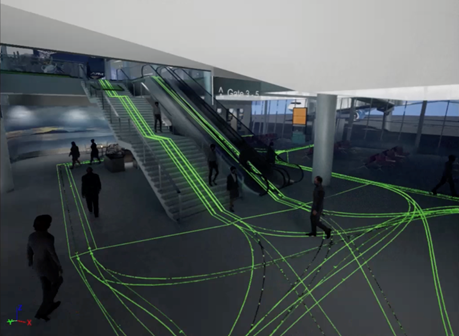
Modeling Infectious Disease Propagation in Airports Using Spatial Simulations on AWS
JHU and AWS simulate infectious disease spread in airports using Unreal Engine’s realistic crowd physics and a novel transmission model accounting for close contact, viral load, and ventilation. Visualizing hotspots informs smarter public health policies to protect passengers and staff.
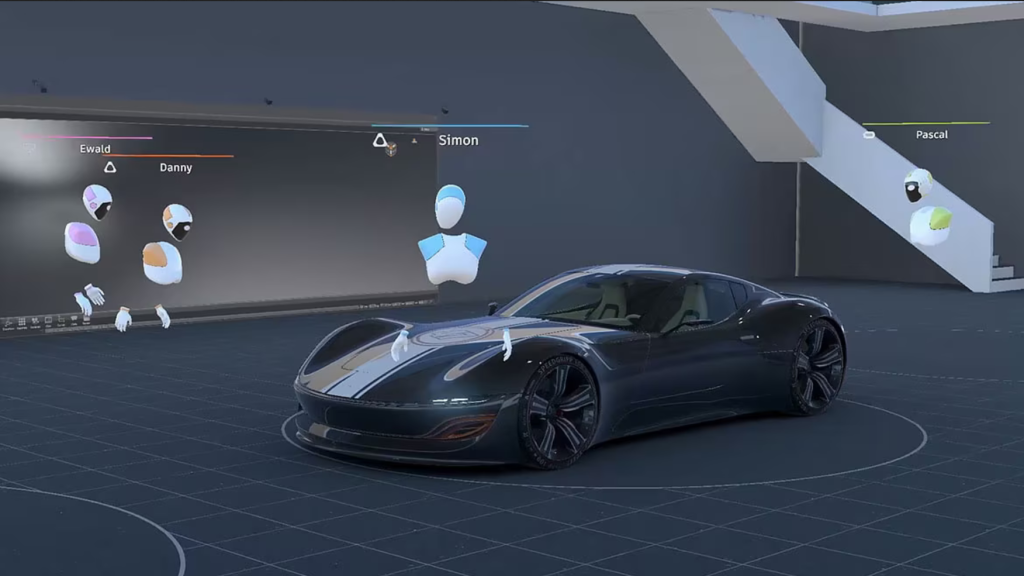
3D Design Reviews On-demand with Autodesk VRED and AWS
Introduction 3D product visualization and virtual prototyping are integral to product design, especially in industries including Manufacturing and Automotive. Last year, teammates from the AWS Spatial Computing community wrote a blog post about Autodesk VRED, a software package that helps designers’ prototype and collaborate on high-quality streams or renders of engineering artifacts. That post, titled […]

The AWS Builder Studio: Out of the Cloud and Down onto the Street
Note: This blog was written by Heidi Buck but edited (for grammar and readability) using Amazon Bedrock Text Playground, using the Jurassic-2 Ultra model and default parameters. The thumbnail image for this blog was created by using Amazon Bedrock Image Playground, using the Titan Image Generator G1 and default parameters. The views, thoughts and opinions […]

Modeling Spread of Infectious Disease Using Spatial Simulations on AWS
Spatial simulations compute the motion and behavior of dynamic entities across 2D and 3D virtual environments. These simulations allow users to explore how the behaviors of individual actors and interactions amongst a group of actors can lead to emergent spatial patterns. The authors of the blog see customers using spatial simulations for use cases such […]

VR Virtual Desktop Prototype on the Meta Quest
There is a lot of attention on virtual reality (VR) these days stemming from advances in hardware, collaboration on emerging standards, and availability of new software libraries, tools, and frameworks. What is most exciting is the invention and innovation that happens under these conditions. Amazon Web Services (AWS) strives to enable the community, customers, and […]