AWS Cloud Operations Blog
Category: Amazon CloudWatch

Enhance CloudWatch metrics with metric math functions
In June 2021, the Amazon CloudWatch team launched 14 new metric math functions. In this blog post, I’ll describe these new functions and show how you can use them to enhance your existing CloudWatch metrics, dashboards, and alarms. Metrics are an important part of observability and monitoring. A numerical representation of data measured over time, […]

Create fine-grained CloudWatch canary schedules with cron expressions
In this post, I’ll explain how to create fine-grained canary schedules to meet your business requirements using built-in cron expression scheduling in Amazon CloudWatch Synthetics. You can use CloudWatch Synthetics to create canaries, configurable scripts that run on a schedule, to monitor your endpoints and APIs. Because canaries follow the same routes and perform the […]

Implement operations observability in landing zone environments
In an earlier blog post, Automate customized deployment of cross-account/cross-region CloudWatch dashboards using tags, we showed you how to implement Amazon CloudWatch dashboards for specific events with automation. This solution is great for seasonal events, holidays, important releases, and other use cases. In this blog post, we will review a landing zone environment and share a […]

Use Amazon EventBridge rules to run AWS Systems Manager automation in response to CloudWatch alarms
Since its launch in 2009, Amazon CloudWatch has become the cloud-native choice for a monitoring and observability service built for DevOps engineers, developers, site reliability engineers (SREs), and IT managers. CloudWatch provides you with data and actionable insights to monitor your applications, respond to system-wide performance changes, optimize resource utilization, and get a unified view […]

Maximize cloud investment value through operational excellence using AWS Managed Services
In this blog post, I share my observations as an AMS Solutions Architect on how achieving operational excellence can help organizations realize their cloud business objectives while migrating to AWS. I dive deep into the five design principles that AWS Managed Services (AMS) uses to achieve operational excellence. Amazon is guided by four principles: customer […]

Managing and monitoring API throttling in your workloads
When you’re architecting for the cloud, you need to keep API throttling in mind, particularly the types of calls and the frequency with which they are called. When the allotted rate limit for an API call is exceeded, you’ll receive an error response and the call will be throttled. Excessive API throttling can result in […]
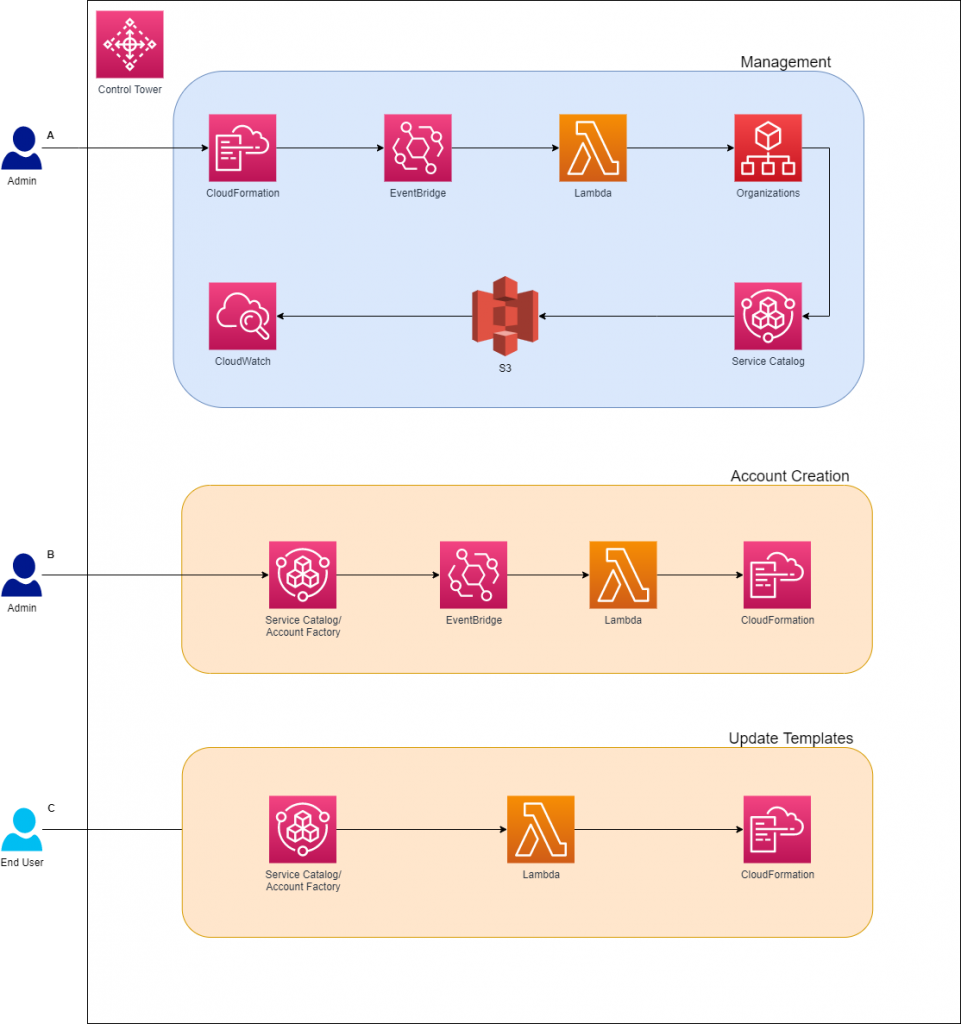
Using AWS Control Tower and AWS Service Catalog to automate Control Tower lifecycle events
Many enterprise customers who use AWS Control Tower to create accounts want a way to extend the account creation process. They want this process to cover common business use cases including the creation of networks, security profiles, governance, and compliance. A manual process manually is cumbersome and makes it difficult for the organization to respond […]

Cost optimization in AWS using Amazon CloudWatch metric streams, AWS Cost and Usage Reports and Amazon Athena
You can use metric streams to create continuous, near-real-time streams of Amazon CloudWatch metrics to a destination of your choice. Metric streams make it easier to send CloudWatch metrics to popular third-party service providers using an Amazon Kinesis Data Firehose HTTP endpoint. You can create a continuous, scalable stream that includes the most up-to-date CloudWatch […]

Monitor network throughput of interface VPC endpoints using Amazon CloudWatch
Security, cost and performance are always a top priority for AWS customers when they design their network. AWS PrivateLink is becoming increasingly popular because it provides secured private connectivity between Amazon Virtual Private Cloud (Amazon VPC), AWS services and your on-premises networks, without exposing your traffic to the public internet. In this blog post, we show you […]
How The Washington Post’s Arc XP uses CloudWatch Metrics Explorer to reduce costs
In this post, it is described how The Washington Post’s Arc XP uses Metrics Explorer to monitor their global SaaS platform and reduce costs